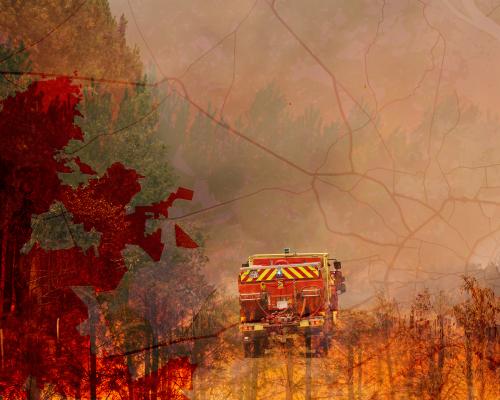
The ruinous fires that overran parts of France this summer have burned more land than ever recorded, forced more people from their homes than at any point since the second world war and caused what scientists suspect is the country’s first firestorm thundercloud.(今年夏天席卷法国部分地区的毁灭性火灾,烧毁的土地面积超过以往任何记录,迫使流离失所的人数达到二战以来之最,并可能形成了科学家认为的该国首个火风暴雷云。) The smoke from France’s biggest inferno(大火,地狱般的景象) in nearly 80 years choked(使窒息,阻塞) Limoges, a city 125 miles (200km) from the flames, with more toxic(有毒的) dust than Delhi residents inhaled(吸入) on the city’s worst day of smog last year.
今年夏天席卷法国部分地区的毁灭性火灾,烧毁的土地面积超过以往任何记录,迫使流离失所的人数达到二战以来之最,并可能形成了科学家认为的该国首个火风暴雷云。这场法国近80年来最严重大火的烟雾,弥漫至距火场125英里(200公里)的利摩日市,其有毒粉尘浓度甚至超过了德里居民去年雾霾最严重一天的吸入量。
The blaze(大火,火焰) that tore through(撕裂,猛冲) forests outside Bordeaux in late July took just a few weeks to reforge(重新锻造,重塑) France’s relationship with fire, but the conditions behind it were centuries in the making(在形成中,酝酿中).
7月下旬,这场大火席卷波尔多郊外的森林,仅用几周时间就重塑了法国与火的关系,但其背后的条件却酝酿了数百年。
In the 18th century, the coastal wetlands of south-western France were so swampy(沼泽的,湿软的) that shepherds used stilts(高跷) to cross them in winter. When an 1857 decree(法令,政令) from Napoleon III forced landowners to drain(排干,排水) the marsh and populate it with maritime pines(海岸松), the water-logged(水浸的,涝的) landscape was converted(转变,改造) into Europe’s largest human-made forest. It has since become a regional economic engine(经济引擎,经济支柱) running on timber that employs 30,000 people.
18世纪,法国西南部的沿海湿地沼泽遍布,牧羊人在冬季需踩着高跷才能穿越。1857年,拿破仑三世颁布法令,强制地主排干沼泽并种植海岸松,这片水浸的土地由此变成了欧洲最大的人工林。此后,这片森林成为以木材为动力的区域经济引擎,雇佣了3万人。