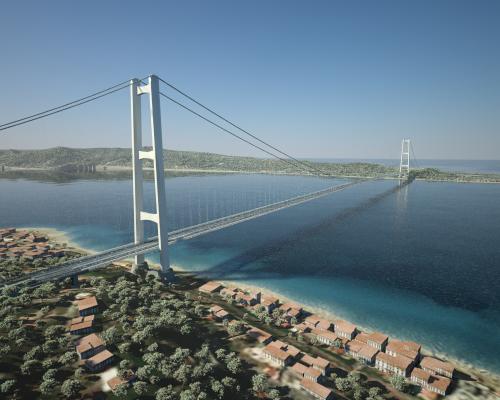
For more than 2,000 years, it has been an obsessive dream(挥之不去的执念): a plan to link(连接,联系) the Mediterranean Sea’s largest island to mainland Italy. It began with the Romans, who, according to Pliny the Elder(古罗马学者老普林尼), built a bridge of boats and barrels across the strait of Messina in 251BC to transport(运输,运送) 140 war elephants captured(俘获,捕获) from the Carthaginians.
两千多年来,这始终是一个执念般的梦想:将地中海最大岛屿与意大利本土连接起来。这一构想始于罗马人——据老普林尼记载,公元前251年,他们曾在墨西拿海峡上用船只和木桶搭建浮桥,运送从迦太基人手中俘获的140头战象。
Centuries later, the fascist dictator Benito Mussolini embraced(欣然接受,拥抱) the same vision, followed by rightwing prime minister Silvio Berlusconi, who made the bridge a flagship(旗舰的,最重要的) project. Then, in 2022, after being appointed Italy’s infrastructure minister, Matteo Salvini revived the mythic ambition, claiming that the ferry crossings “cost people more in a year than it would cost to build the bridge”.(2022年,萨尔维尼就任意大利基建部长后重提建桥梦,称渡轮年花费高于建桥成本。)
几个世纪后,法西斯独裁者贝尼托·墨索里尼也怀有同样的愿景,随后是右翼总理西尔维奥·贝卢斯科尼,他将这座桥列为旗舰项目。接着,在2022年,马泰奥·萨尔维尼被任命为意大利基础设施部长后,重拾了这一神话般的雄心,声称渡轮运输“一年花费的钱比建桥的成本还要高”。
Since then, however, there have been more promises than action. Salvini’s stated goal of breaking ground(破土动工) on the €13.5bn project in 2024 slipped(滑落,推迟) to early 2025 and then early 2026. In February, with opponents openly mocking(在反对者公开嘲笑下) the repeated delays, the leader of the far-right Lega insisted(坚称,坚持) construction would finally begin by this summer.
然而,自那以来,承诺多于行动。萨尔维尼曾表示要在2024年启动这项耗资135亿欧元的项目,但这一目标先推迟到2025年初,又推迟到2026年初。今年2月,在反对者公开嘲讽一再拖延之际,这位极右翼联盟党领袖坚称,工程最终将在今年夏天开工。