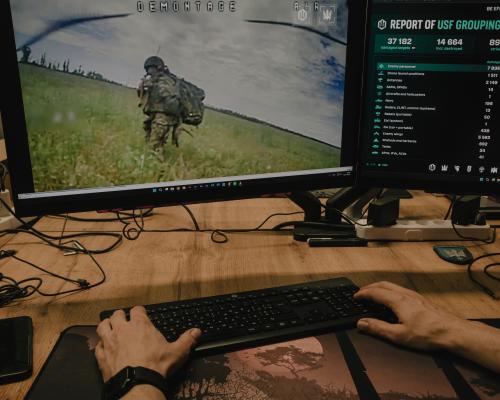
To many observers they will appear dehumanising(使失去人性的,非人化的) and offensive. To many Ukrainians, however, they are a brutal reminder of the fate that awaits Russian soldiers who take part in Vladimir Putin’s invasion, as well as a potent propaganda weapon.(然而,对许多乌克兰人来说,它们残酷地提醒人们参与普京入侵的俄军士兵的命运,也是一种强大的宣传武器。)
在许多观察者看来,这些视频显得不人道且令人反感。然而,对许多乌克兰人来说,它们残酷地提醒人们参与弗拉基米尔·普京入侵的俄罗斯士兵将面临的命运,同时也是一种强大的宣传武器。
Over the past year and a half, videos of kamikaze(神风特攻队的,自杀式的) drones chasing Russian service personnel to their deaths have become a distinctive genre on social media. They are the brainchild(独创的构想,智慧的产物) of Robert Brovdi, the head of Ukraine’s unmanned systems forces and founder of “Magyar’s Birds”, named after(以……命名) his call sign(呼号,代号).
在过去一年半里,神风无人机追击俄罗斯军人直至其死亡的视频已成为社交媒体上一种独特的类型。这些视频是乌克兰无人系统部队负责人、“马扎尔之鸟”创始人的罗伯特·布罗夫迪的创意,该组织以其呼号命名。
Brovdi’s 414th aviation strike brigade has pioneered(开创,倡导) the use of battlefield video, much of it recorded by first-person-view drones. The death videos are known as yoblyks(乌克兰俚语,混合词,含粗俗词根和亲昵后缀), a portmanteau(混合词,合成词) that combines the root of the Ukrainian for “fuck” with an affectionate diminutive(指小词,表示亲昵的) form. The closest English translation is probably “fuckling”.
布罗夫迪的第414航空突击旅率先使用战场视频,其中大部分由第一人称视角无人机拍摄。这些死亡视频被称为“yoblyks”,这是一个混合词,结合了乌克兰语中“操”的词根和一种亲昵的指小形式。最接近的英文翻译可能是“fuckling”。