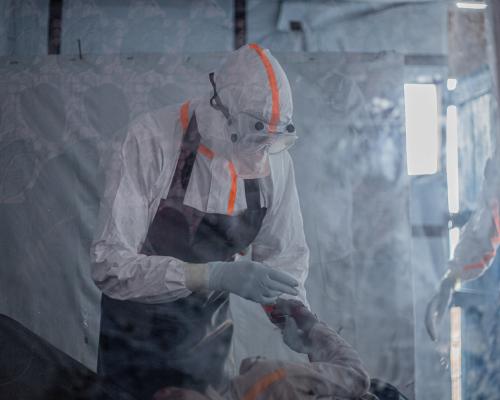
Health authorities in the Democratic Republic of the Congo are losing their battle(在战斗中失利,节节败退) to contain(遏制,控制(扩散)) the country’s deadliest Ebola outbreak.
刚果民主共和国的卫生当局正在输掉遏制该国最致命埃博拉疫情的战役。
DRC’s health ministry declared an outbreak in Ituri province on 15 May, though sequencing(基因测序) shows it had begun in February. It has since spread to five other provinces and is on track to(有望,即将) overtake(超过,超越) the 2014-16 west Africa outbreak as the largest in history.
刚果(金)卫生部于5月15日宣布伊图里省暴发疫情,尽管测序显示疫情早在2月就已开始。此后,疫情已蔓延至其他五个省份,并有望超过2014-16年西非疫情,成为历史上最大的一次。
As of(截至(某时)) Sunday, 2,325 people had died and the number of confirmed cases stood at(达到(某数量)) 4,945, according to DRC government data. “Ebola is winning in the Democratic Republic of the Congo,” the UN humanitarian affairs chief, Tom Fletcher, said on Friday. “We cannot let the virus outrun(超过,跑得比……快) our response.”
据刚果(金)政府数据,截至周日,已有2325人死亡,确诊病例数达4945例。联合国人道主义事务负责人汤姆·弗莱彻周五表示:“埃博拉正在刚果民主共和国占上风。我们不能让病毒跑赢我们的应对措施。”
What is Ebola?
什么是埃博拉?
Why is this outbreak causing such concern?
为什么这次疫情引发如此大的担忧?
Why was the outbreak not detected sooner and why does that matter?
为什么疫情没有及早被发现,为什么这很重要?
How big could this outbreak get?
这次疫情可能有多大?