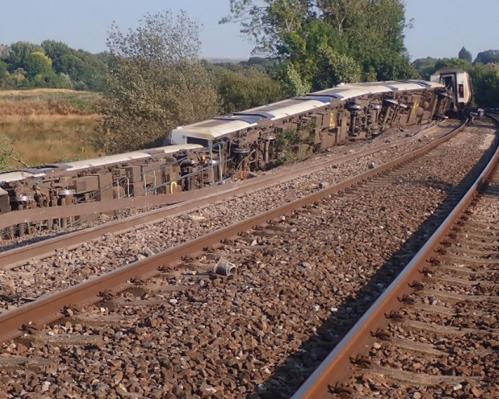
Britain’s railways have faced a string of(一连串;一系列) heat-related problems this summer, including a derailment(脱轨;出轨) near Lewes in East Sussex two weeks ago that injured 30 people, and another the next day when the rear(后部的;后面的) carriage((火车)车厢)s of a Greater Anglia train derailed “in an upright(直立的;垂直的) position” at Wickford railway station in Essex, with no reported injuries.
今年夏天,英国铁路面临一连串与高温相关的问题,包括两周前在东萨塞克斯郡刘易斯附近发生的一起脱轨事故,造成30人受伤;次日,一列大安格利亚列车的后部车厢在埃塞克斯郡威克福德火车站“以直立姿态”脱轨,据报道无人受伤。
The problems came during one of the hottest and driest summers on record(有记录以来的), with a series of heatwaves, and drought(干旱;旱灾) declared across large parts of England and Wales. Britain’s railways, built for a cooler, wetter climate, have been put under pressure(使承受压力). Network Rail said the summer had “presented exceptional(异常的;杰出的) challenges to the railway”.
这些问题发生在有记录以来最炎热、最干旱的夏季之一,期间出现了一系列热浪,英格兰和威尔士大部分地区宣布干旱。英国铁路是为更凉爽、更湿润的气候而建的,如今已承受压力。英国铁路网公司表示,这个夏天“给铁路带来了非同寻常的挑战”。
Here’s what we know about how heat affects the rail network and what can be done to tackle it.(以下是我们所了解的关于高温如何影响铁路网以及如何应对的情况。)
以下是我们所了解的关于高温如何影响铁路网以及如何应对的情况。
What happens to railways in the heat?
高温下铁路会发生什么?
How do hotter countries cope?
更热的国家如何应对?
What can be done?
可以采取什么措施?
Did the Lewes derailment happen because of the heat?
刘易斯脱轨事故是由高温引起的吗?