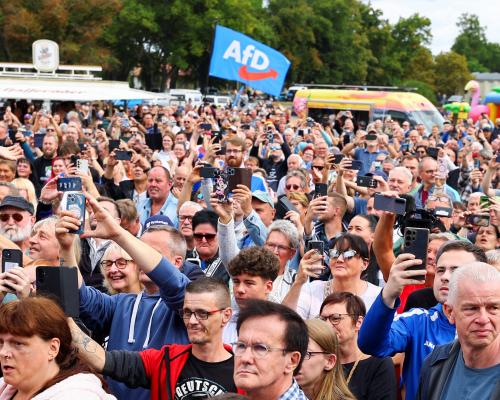
It was in the summer of 2004 that I stopped understanding my own people.(正是在2004年夏天,我不再理解自己的同胞。) I was standing on a sweltering(闷热的,酷热的) market square in Aschersleben, the town where I was born, picturesquely(风景如画地) situated on the northern edge of the Harz mountains. A large crowd of angry people had gathered in front of a stage to protest about the welfare reforms (or, as many saw them, welfare cuts) introduced by the Social Democratic-Green coalition government under chancellor Gerhard Schröder(格哈德·施罗德,德国前总理). They chanted “We are the people!”, waved handpainted placards and seemed utterly beside themselves(极度激动,失去自制).
正是在2004年的夏天,我不再理解自己的同胞。我站在阿舍斯莱本一个闷热的集市广场上——那是我出生的城镇,坐落在哈尔茨山脉北缘,风景如画。一大群愤怒的人聚集在舞台前,抗议由总理格哈德·施罗德领导的社会民主党-绿党联合政府推行的福利改革(在许多人心目中,这是福利削减)。他们高呼“我们是人民!”,挥舞着手工绘制的标语牌,看起来完全失去了理智。
I had gone to secondary school nearby, volunteered at the local hospital and interned at the local newspaper: I knew this place. And yet I found myself bewildered(困惑的,不知所措的). What, exactly, did these deeply aggrieved(愤愤不平的,受委屈的) people want – standing on a freshly renovated, almost idyllic market square? Weren’t things going reasonably well for them? Where did this burning resentment(强烈的怨恨) toward the west come from? Wasn’t the east-west divide supposed to be disappearing by now?
我曾在附近上中学,在当地医院做志愿者,还在当地报社实习:我了解这个地方。然而我却感到困惑。这些深感不满的人站在一个刚刚翻新、几乎如田园诗般的集市广场上,到底想要什么?他们的日子不是过得还不错吗?这种对西方的强烈怨恨从何而来?东西德之间的隔阂难道不是应该早已消失了吗?
More than two decades later, similar questions can once again be asked.
二十多年后,类似的问题再次被提出。