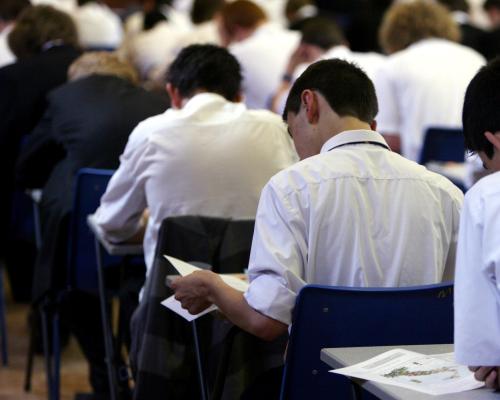
GCSE results day was marked with the usual front pages filled with pictures of beaming(笑容满面的) students. What you didn’t see was the invisible(看不见的,隐形的) third of 16-year-olds in England who failed their maths and English GCSEs, the obstacle to their future(他们未来的障碍).
GCSE成绩公布日,各大报纸头版照例满是喜气洋洋的学生照片。但你看不到的是,英格兰有三分之一16岁的学生数学和英语GCSE不及格,他们成了隐形人,这成为他们未来的障碍。
That’s 360,000 failed in a system designed by Michael Gove as education minister to mark out(区分,标出) winners from losers. It’s a cast of mind(一种思维方式,心态) shared by many in his party who still yearn for(渴望,怀念) the 11-plus(英国旧式小升初考试), which consign(把…置于,使…陷入)ed a random number of children to failure before they’d hardly begun. A few councils still do it.
这意味着36万人不及格,而这一制度正是迈克尔·戈夫在教育大臣任内设计的,目的是区分优胜者和失败者。他的党内许多人也有这种心态,他们仍然怀念11-plus考试,这种考试在孩子们几乎还没开始时就武断地将一批人推向失败。少数地方议会仍在实行这种考试。
Once failed, this one-third must resit(重考,补考) English and maths to do any other course: colleges cannot provide them with a blessed start(良好的开端) from failed schooling, as they are refused funds for any student not taking repeated resits. Only about 17% of the wretched(可怜的,悲惨的) resitters ever pass. Quite apart from(且不说,除了…之外) the despair, David Hughes, head of the Association of Colleges, points to the waste: of the far-too-few(少得可怜的) 16 teaching hours a week for students on post-16 study courses, resitters must be taught seven hours of hated English and maths that most of them will fail. That leaves just nine hours for the vocational courses they choose. No wonder UCL research shows the damage done: self-confidence is lost, many drop out(辍学,退出) altogether. That doesn’t happen in Wales and Northern Ireland, where resits are not mandatory(强制性的,法定的) for continuing study.
一旦不及格,这三分之一的学生必须重考英语和数学才能学习其他课程:学院无法为这些学业失败的学生提供一个良好的开端,因为如果学生不参加反复的重考,学院就拿不到经费。这些可怜的重考生中只有约17%能通过。且不说绝望情绪,英国学院联合会主席戴维·休斯指出了浪费之处:16岁后学习课程的学生每周仅有少得可怜的16个教学小时,而重考生必须花7个小时学习他们大多会不及格的、令人厌恶的英语和数学。这样他们选择的职业课程就只剩下9个小时。难怪伦敦大学学院的研究显示了这种伤害:自信心丧失,许多人干脆辍学。在威尔士和北爱尔兰,情况并非如此,那里继续学习并不强制要求重考。