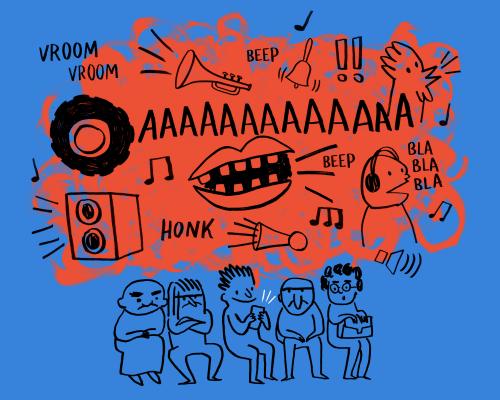
‘Interesting cities can’t be quiet”, runs one of grime DJ and music industry thinker Elijah’s epigrams(警句,格言) – and in its essential spirit, he is right. Silent, tidy, prim(拘谨的,古板的) cities should be treated with suspicion. Any such atmosphere denotes that something has gone wrong at a macro level: either you’ve wound up(最终处于(某种境地)) in an authoritarian regime or, worse, Switzerland(瑞士,常被调侃为无聊、规矩的国家).
“有趣的城市不可能安静”,这是grime音乐DJ兼音乐产业思想家Elijah的一句格言——就其本质精神而言,他说得没错。安静、整洁、拘谨的城市理应受到怀疑。任何这样的氛围都意味着宏观层面出了问题:要么你最终身处威权政权,要么,更糟的是,瑞士。
But not all urban sounds are created equal(生而平等(源自美国独立宣言)), and some are more unwelcome than others. Take the tide of(……的浪潮) (Instagram, TikTok, YouTube) reels(短视频(社交媒体功能)) crashing on the shores of our collective attention on public transport, thanks to the astonishing number of grown adults who think it’s OK to surf the slopwave(冲浪垃圾浪潮(比喻刷低质内容)) without headphones.
但并非所有城市声音生而平等,有些比其他的更不受欢迎。想想那潮水般的(Instagram、TikTok、YouTube)短视频,冲击着我们公共交通上集体注意力的海岸,这要归功于数量惊人的成年人,他们觉得不戴耳机冲浪“垃圾浪潮”没什么大不了。
These rotters(讨厌鬼,无赖) are accompanied by people taking their phone or video calls out loud on speakerphone. In the early days of mobile phones it was a widely agreed social truism(自明之理,老生常谈) that the white-collar worker unselfconsciously bellowing(大声吼叫) “I’m on the train!” into their BlackBerry was a grade-A(一流的,头等的(贬义)) public nuisance, plausibly worthy of throwing in the stocks(戴上颈手枷(古代刑罚)). Well, at least then we were only being subjected to one end of the conversation.
这些讨厌鬼之外,还有用扬声器大声接打电话或视频通话的人。在手机早期,人们普遍认同一个社会常识:白领员工不自觉地对着黑莓手机大喊“我在火车上!”是一级公害,似乎应该被戴上颈手枷。好吧,至少那时我们只被迫听到对话的一端。