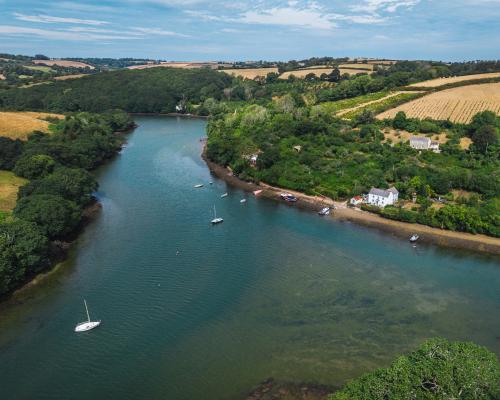
On a rocky beach in Cornwall, a group of wetsuit-clad freedivers and snorkellers are wading(蹚水,涉水) into the shallows. Below St Mawes Castle, built by Henry VIII to defend Falmouth harbour, they disappear in a swish of(嗖的一声,一挥) florescent(发荧光的,鲜艳的) pink and green fins.
在康沃尔的一处岩石海滩上,一群身穿潜水服的自由潜水员和浮潜者正涉水进入浅滩。在圣莫斯城堡(由亨利八世为保卫法尔茅斯港而建)下方,他们在一片荧光粉和绿色脚蹼的划动中消失了。
They are volunteers, trained by the Cornwall Wildlife Trust to use underwater cameras and floating GPS devices to detect(发现,察觉,监测) changes in marine habitats over time(随着时间的推移).
他们是志愿者,由康沃尔野生动物信托基金培训,使用水下摄像机和漂浮式GPS设备来监测海洋栖息地随时间的变化。
Their work is vital because beneath the surface of Falmouth’s busy natural harbour, known as Carrick Roads, are two of the UK’s most biodiverse and carbon-rich marine habitats: lush seagrass meadows and purple-pink carpets of ancient maerl – a rare and fragile coral-like seaweed.(他们的工作至关重要,因为在法尔茅斯繁忙的天然港口(即卡里克水道)的水面之下,有英国生物多样性最丰富、碳含量最高的两种海洋栖息地:茂密的海草草地和古老石枝藻形成的紫粉色地毯——这是一种稀有而脆弱的珊瑚状海藻。) They are some of the largest such beds in England.
他们的工作至关重要,因为在法尔茅斯繁忙的天然港口(即卡里克水道)的水面之下,有英国生物多样性最丰富、碳含量最高的两种海洋栖息地:茂密的海草草地和古老石枝藻形成的紫粉色地毯——这是一种稀有而脆弱的珊瑚状海藻。它们是英格兰最大的此类海草床之一。