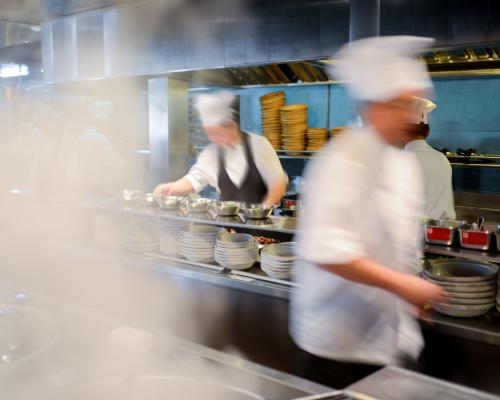
Leaping flames, searing heat, copious(大量的,丰富的) sweat and scorchingly inventive swearing – restaurant kitchens are never a place for the faint-hearted(不适合胆小者), but this summer they have been sweltering(闷热的,热得难受的) in successive heatwaves to a dangerous degree(达到危险的程度).
跳跃的火焰、灼人的高温、大量的汗水,以及热辣到极致的咒骂——餐厅厨房从来不是胆小者待的地方,但今年夏天,接连的热浪让厨房闷热到了危险的程度。
Some restaurants, cafes and bakeries in the UK grew so hot that they were forced to close, or reduce their hours, for the safety of their staff. There is still no maximum working temperature, despite calls from the TUC, and tens of thousands of kitchen staff are thought to have carried on working in “furnace-like” conditions.(尽管TUC呼吁,仍无最高工作温度规定,数万厨房员工在火炉般环境下工作。)
英国的一些餐厅、咖啡馆和面包店热得不得不关门或缩短营业时间,以保障员工安全。尽管英国工会联盟(TUC)呼吁,但至今仍没有最高工作温度的规定,数以万计的厨房员工被认为一直在“火炉般”的环境中继续工作。
Now a number of chefs are calling for one route to cooling kitchens that may be deeply unpopular with some of their colleagues. Swapping gas hobs for electric induction cooking can reduce temperatures by as much as 10C, as induction cookers only heat the food in the pans. They are more efficient, can reduce costs, are safer as they avoid the harmful pollutants(污染物) emitted by gas cookers, and make it easier for air conditioning to work in crowded kitchen environments. But up to now(到目前为止) many chefs have been reluctant(不情愿的,勉强的) to make the change.
如今,一些厨师正在呼吁一种可能让部分同行极为反感的厨房降温方法:将燃气灶换成电磁炉。由于电磁炉只加热锅中的食物,厨房温度最多可降低10摄氏度。电磁炉更高效、能降低成本、更安全(避免了燃气灶排放的有害污染物),还能让空调在拥挤的厨房环境中更容易发挥作用。但到目前为止,许多厨师仍不愿做出改变。