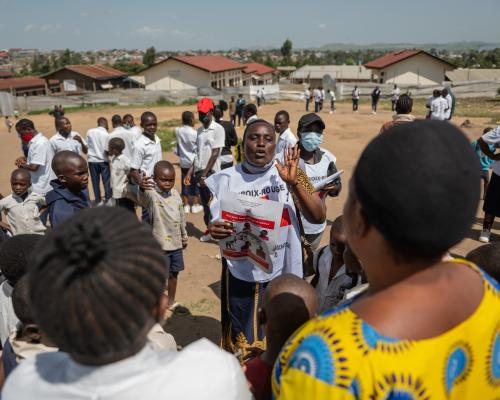
Each time we travel to the Democratic Republic of the Congo (DRC), we go first to listen. In Bunia, we have met dozens of(许多,几十个) community representatives(代表): survivors, women, young people, local organisations, health workers and leaders from affected areas.
每次我们前往刚果民主共和国(DRC),我们首先会去倾听。在布尼亚,我们见到了数十位社区代表:幸存者、妇女、年轻人、当地组织、卫生工作者以及来自受影响地区的领导人。
Their message was direct: involve(使参与,涉及) us. We know our communities. We know where families seek care, how information moves and why trust is breaking down.(我们知道家庭去哪里寻求医疗,信息如何传播,以及信任为何正在瓦解。) Give us the means to help drive the response. They were right.
他们的信息直截了当:让我们参与。我们了解我们的社区。我们知道家庭去哪里寻求医疗,信息如何传播,以及信任为何正在瓦解。给我们提供推动应对工作的手段。他们是对的。
Ebola spreads through communities – and communities hold the knowledge required(必需的,所需的) to stop it.
埃博拉病毒通过社区传播——而社区掌握着阻止它所需的知识。