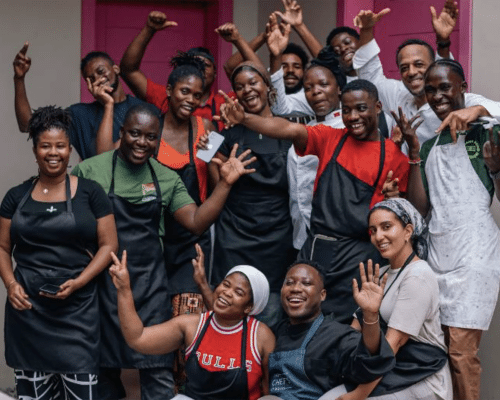
After three years at catering(餐饮业;酒席承办) school in Accra, Abiro Wisdom was certain of one thing – he did not want to go into catering. At least not the route(路线;途径) that he might be expected to take. His course had prepared students for working in international hotels, focusing on French, Italian and Mexican cuisine. The nutritious, homegrown(自家种植的;本地的) food that Wisdom had eaten while growing up in Bolgatanga, northern Ghana, did not feature(以……为特色;起重要作用) at all.
在阿克拉的烹饪学校学习了三年后,阿比罗·威兹德姆对一件事确信不疑——他不想从事餐饮业。至少不是人们可能期望他走的那条路。他的课程是为学生去国际酒店工作而准备的,重点教授法式、意式和墨西哥菜肴。而威兹德姆在加纳北部博尔加坦加长大时吃过的那些营养丰富、自家种植的食物,在课程中完全没有出现。
“I didn’t see myself there(想象自己在那里工作),” he says of the big chain hotels. “I felt I wouldn’t be myself(无法做真实的自己) working there – I wouldn’t be able to talk about the food from where I come from.”
“我在那里看不到自己,”他谈到那些大型连锁酒店时说。“我觉得在那里工作我会失去自我——我将无法谈论来自我家乡的食物。”
Wisdom instead joined the Ghana Food Movement (GFM), which was founded in 2019 – the year he graduated – and quickly became a champion(拥护者;捍卫者) for Indigenous(本土的;土著的) foods. He says: “We’re a community of food lovers, of believers in the potential of Ghanaian food.”
威兹德姆转而加入了加纳食品运动(GFM),该运动成立于2019年——也就是他毕业那年——他很快成为本土食品的倡导者。他说:“我们是一个美食爱好者社区,是一群相信加纳食物潜力的人。”