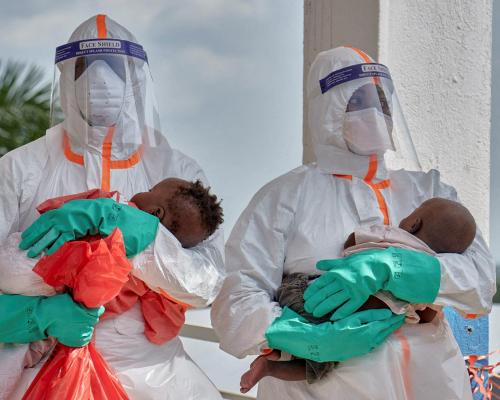
The statistics, says the man responsible for overseeing the Ebola response in the Democratic Republic of the Congo (DRC), are meaningless. That it is now the largest outbreak, the most deadly strain, that 100 days have passed, that the death rates keep climbing, says Prof Pierre Akilimali, should never detract from the human tragedies at the centre of this virus.(阿基利马利教授表示,这些事实都不应削弱病毒核心的人道悲剧。)
负责监督刚果民主共和国(刚果(金))埃博拉疫情应对工作的人说,这些统计数据毫无意义。皮埃尔·阿基利马利教授表示,现在是最大规模的疫情、最致命的毒株、已经过去100天、死亡率持续攀升,这些都不应削弱这场病毒核心的人道悲剧。
“It is behind those numbers that matters; it is the father, the child, the loved relative. Behind every case is a person and behind every person is a family. For us Congolese, we hold on to(紧紧抓住,坚持) that as we work.”
“重要的是那些数字背后;是父亲、孩子、挚爱的亲人。每个病例背后是一个人,每个人背后是一个家庭。我们刚果人在工作中始终铭记这一点。”
But Akilimali, of the DRC’s National Public Health Institute, and now the incident manager of the country’s multi-agency response, is certain that those numbers will keep on(继续) sharply rising. As of 24 August, the Bundibugyo variant(变体,变种) of the virus had 5,656 confirmed(确诊的) cases and 2,715 deaths.
但阿基利马利——来自刚果(金)国家公共卫生研究所,现任该国多机构应对措施的负责人——确信这些数字将继续急剧上升。截至8月24日,该病毒的本地布尼奥毒株已有5656例确诊病例和2715例死亡。