Fatima al-Ashkar used toys to explain to her children that their father had been killed. She arranged toy soldiers in a mock(模拟的,假装的) battle and picked up an airplane, miming(模仿,模拟动作) an air raid(空袭) on the plastic men below.
法蒂玛·阿什卡尔用玩具向孩子们解释他们的父亲已经遇难。她摆弄着玩具士兵,模拟一场战斗,然后拿起一架飞机,模仿对下方塑料小人进行空袭。
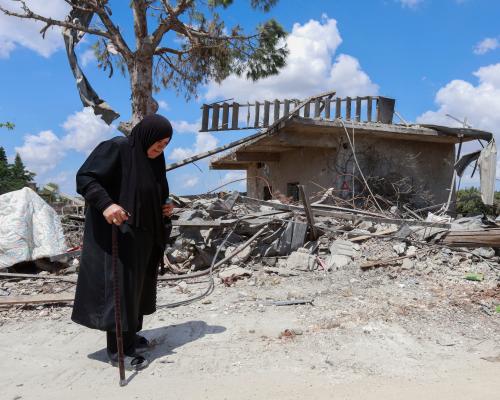
“I started explaining to them: ‘Israel came and bombed here. Daddy was here. Daddy was martyred(殉难的,牺牲的). Daddy was protecting us from Israel,’” said al-Ashkar, a 26-year-old resident(居民,住户) of Markaba, south Lebanon. Her husband, Mohammed Ali, who was a member of Hezbollah(黎巴嫩真主党,什叶派政治和军事组织), was killed fighting(在战斗中阵亡) Israel in the region in early April.
“我开始向他们解释:‘以色列来轰炸了这里。爸爸当时在这里。爸爸殉难了。爸爸在保护我们免受以色列的伤害,’”26岁的阿什卡尔说,她住在黎巴嫩南部的马尔卡巴。她的丈夫穆罕默德·阿里是真主党成员,于四月初在该地区与以色列作战时阵亡。
But the young widow(寡妇,遗孀) was not alone in shouldering the burden(承担重担) of her sudden loss. The sophisticated(复杂的,精密的) machinery of Hezbollah’s social support system soon stepped in(介入,插手).
但这位年轻的遗孀并非独自承受这突如其来的丧亲之痛。真主党社会支持系统中精密的机制很快介入了。