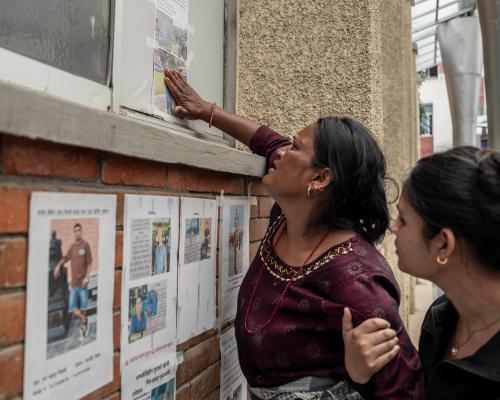
Posters of missing people line(沿…排列;排队) the wall of the hospital, the glue still fresh beneath. A schoolgirl smiling in her uniform; a beaming(笑容满面的,喜气洋洋的), chubby-cheeked(脸颊胖乎乎的) baby; a couple smiling on their wedding day; a young man, hands on hips(双手叉腰), atop a mountain peak; a young girl with flowing hair, peeking(偷看,窥视) out from behind a door.
医院墙上贴满了失踪者的海报,下面的胶水还未干透。一个穿着校服微笑的女学生;一个笑容满面、脸颊胖乎乎的婴儿;一对在婚礼当天微笑的夫妇;一个双手叉腰站在山顶的年轻男子;一个长发飘飘、从门后探出头来的小女孩。
These faces are just a fraction(一小部分;分数) of the thousands who have not been seen since deadly flash floods(山洪暴发,骤发洪水) coursed(奔流,快速流动) through the Himalayas and wiped away(抹去,彻底摧毁) entire villages. By Saturday morning, the toll(伤亡人数;代价) of the missing had risen to almost 3,000, in both Nepal and Tibet.
这些面孔只是自致命山洪席卷喜马拉雅山脉并冲毁整个村庄以来,数千名失踪者中的一小部分。截至周六上午,尼泊尔和西藏的失踪人数已升至近3000人。
So far, Nepal has recovered(找回,找到(遗体)) 675 bodies, but many remote areas have only been accessed by army helicopters on the hunt for(在搜寻…,寻找…) survivors. Rescuers said it was too difficult to assess(评估,估算) how many more people might be buried(被埋的,埋葬) beneath the mud.
到目前为止,尼泊尔已找到675具遗体,但许多偏远地区只有军用直升机在搜寻幸存者时才能到达。救援人员表示,很难评估还有多少人可能被埋在泥浆之下。