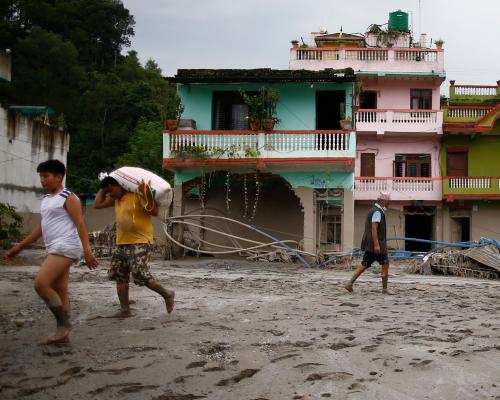
The first thing is the noise – chopper(直升机(口语)) blades cutting through the air as helicopters come and go(来来往往,进进出出) from the main army response centre, at the entrance to Nepal’s flood zone.
首先感受到的是噪音——直升机在尼泊尔洪水区入口处的陆军应急中心起降,旋翼划破空气的声音。
Then, there is the smell. A putrid(腐烂的,恶臭的), iodine(碘,碘酒) smell. Blood and bone. The severe heat beating down on bodies packed into white bags – being carried off helicopters and laid in an area so families can identify them.
接着是气味。一股腐烂的、碘酒般的气味。血与骨的气味。酷热炙烤着装在白色袋子里的遗体——它们被抬下直升机,放在一片区域,以便家属辨认。
On Sunday the combined toll(伤亡人数,代价) in Nepal and Tibet climbed to 781 dead and more than 3,000 people missing. Forty-three of them are Australians. The humanitarian crisis on the ground is huge – but aid, a large amount of it from Australia, has started to arrive.(当地的人道主义危机十分严峻——但援助已经开始抵达,其中大量来自澳大利亚。)
周日,尼泊尔和西藏地区的合计死亡人数攀升至781人,另有超过3000人失踪。其中43人是澳大利亚人。当地的人道主义危机十分严峻——但援助已经开始抵达,其中大量来自澳大利亚。
‘It was seconds’
“只有几秒钟”
‘Namaste’
“合十礼”
‘Everything is gone’
“一切都消失了”