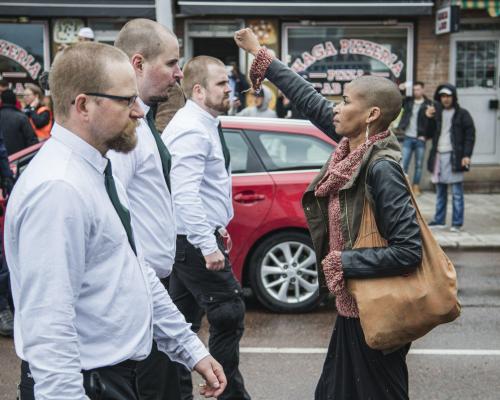
The striking(引人注目的,显著的) photograph showed a lone Black woman, her fist raised, standing in the path of hundreds of uniformed(穿制服的) neo-Nazis on parade(在游行,在列队行进) in 2016, and it made headlines across the globe.
这张引人注目的照片拍摄于2016年,画面中一位黑人女性独自站在数百名身着制服、正在游行的新纳粹分子面前,高举拳头,这张照片登上了全球各地的头条。
At the time, it was held up as(被推崇为,被举为) a symbol of the resistance to the far right. But 10 years on, as Sweden gears up for elections in which the far right is expected to emerge as the second most-voted-for party, the woman in the photo sees it as a sign of the bewildering change that has gripped the Scandinavian country.(但十年过去,瑞典即将举行大选,极右翼预计将成为得票第二的政党,照片中的女性认为这象征着这个斯堪的纳维亚国家所经历的令人困惑的变化。)
当时,这张照片被视为反抗极右势力的象征。但十年过去,瑞典即将迎来大选,极右翼预计将成为得票第二多的政党。照片中的女性认为,这张照片恰恰反映了这个斯堪的纳维亚国家所经历的令人困惑的变化。
“Ten years ago, people would say: ‘Oh we dislike the far right, the Sweden Democrats, we despise(鄙视,蔑视) Nazis,’” said Tess Asplund, 52. “And now, they’ve become normalised(使正常化,使成为常态). It’s like(就好像,就像是), what happened?”
“十年前,人们会说:‘哦,我们不喜欢极右翼,不喜欢瑞典民主党,我们鄙视纳粹,’”52岁的泰丝·阿斯普伦德说。“而现在,他们已经正常化了。就像在问:发生了什么?”