On a bitingly(刺骨地,尖利地) cold night in Lapalala Wilderness nature reserve in South Africa’s Limpopo province, Duncan Kanyakera watches as instructor Jacques Viljoen deploys(部署,调动) a thermal(热能的,热成像的) drone in search of(寻找) a lone cheetah. Once the drone has disappeared into the inky(漆黑的,墨黑的) sky, Kanyakera, from Tsavo in Kenya, and 20 other conservation professionals from across Africa turn their attention to the open-air screen in anticipation(期待地).
在南非林波波省拉帕拉拉荒野自然保护区一个刺骨寒冷的夜晚,邓肯·卡尼亚凯拉注视着教官雅克·维尔容部署一架热成像无人机,寻找一只孤独的猎豹。无人机消失在漆黑的天空中后,来自肯尼亚察沃的卡尼亚凯拉和来自非洲各地的另外20名保护专业人士满怀期待地将注意力转向露天屏幕。
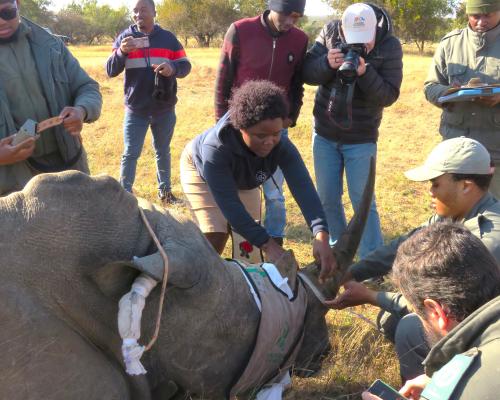
Many of the students – from 11 African countries as far flung(遥远的,分布广的) as Benin, Liberia, the Democratic Republic of the Congo and Madagascar – witnessing(目睹,见证) the demonstration have earned their places at Lapalala after performing(表现,执行) well on an online training programme for protected area technicians(技术人员) (PAT) run by the Connected Conservation Foundation (CCF). Also on the course, are five members of Peace Parks staff in training.
这些学生中有许多人来自远至贝宁、利比里亚、刚果民主共和国和马达加斯加等11个非洲国家,他们在由互联保护基金会(CCF)运营的保护区技术人员(PAT)在线培训项目中表现出色,从而赢得了在拉帕拉拉的名额。参加课程的还有和平公园的五名受训工作人员。
“Data and technology are critical(至关重要的) to modern conservation,” says CCF’s Sophie Maxwell. “Cameras and collars and software like EarthRanger have transformed the fight against poaching(偷猎) … But then an elephant knocks over(撞倒) a pole and you are back to square one(回到原点,前功尽弃).”
“数据和技术对现代保护工作至关重要,”CCF的索菲·麦克斯韦说。“摄像头、项圈和像EarthRanger这样的软件已经改变了打击偷猎的斗争……但随后一头大象撞倒了一根杆子,你又回到了原点。”