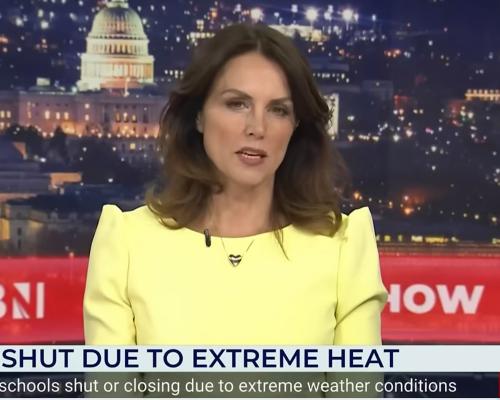
As the first heatwave of the record-breaking summer arrived on 23 May, GB News host Cristo Foufas was not happy: “I am sick to death of(对…极其厌烦) the naysayer(唱反调者,否定者)s saying firstly that we’re all going to die and that we have to put out heat alerts, because, you know, just drink some water and drink a bit less rosé(桃红葡萄酒) in the sunshine.”
5月23日,这个创纪录夏季的第一波热浪来袭时,GB News 主持人克里斯托·富法斯很不高兴:“我烦透了那些唱反调的人,他们先说我们都会死,又说我们必须发布高温警报,因为,你知道,只要喝点水,在阳光下少喝点桃红葡萄酒就行了。”
“We used to call it Darwinism(达尔文主义,此处指自然选择),” replied co-host Renée Hoenderkamp. She is a medical doctor.
“我们过去称之为达尔文主义,”联合主持人勒妮·胡恩德坎普回应道。她是一名医生。
The arrival of the intense(强烈的,极度的) heatwave in late June – the most extreme recorded in Europe – didn’t change the tone(改变语气或论调). “People die each year from vending machine(自动售货机)s falling on them, and coconuts hitting their heads. People die, unfortunately, that’s a reality of life, and things get hot,” said Will Kingston, a presenter and contributor on GB News, a free-to-air television news channel. “It doesn’t mean you have to go about changing your life in ways big and small to accommodate(适应,迁就) for it.”
6月下旬,强烈热浪来袭——这是欧洲有记录以来最极端的——但并未改变他们的论调。“每年都有人死于自动售货机倒塌砸中,或被椰子砸中脑袋。不幸的是,人总会死,这是生活的现实,天气也会变热,”GB News(一家免费收看的电视新闻频道)的主持人兼撰稿人威尔·金斯顿说。“这并不意味着你必须大大小小地改变生活方式来适应它。”