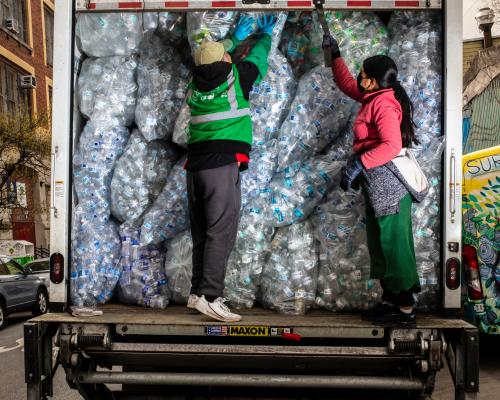
In New York City, the plastic we discard(丢弃,抛弃) has a way of remaining in plain sight(在显眼处,公开地). There are few alleys to hide residents’ refuse(垃圾,废物), and the clear recycling bags leave their contents on full display. In a city built on a dense grid, lightweight wrappers, bags and bottles spill from overflowing bins and skitter(轻快地掠过,蹦跳) down sidewalks, collecting in gutters and corners before the wind carries them on.
在纽约市,我们丢弃的塑料总会在众目睽睽之下留存。这里几乎没有小巷可以藏匿居民的垃圾,透明的回收袋将里面的东西完全暴露。在这座建于密集网格之上的城市里,轻薄的包装纸、袋子和瓶子从满溢的垃圾箱中洒落,在人行道上飞掠,聚集在排水沟和角落,直到风将它们带走。
All that plastic is a layer of the urban landscape, as familiar as subway grates and fire escapes, revealing a messy and unflattering(不恭维的,不讨喜的) aspect of city life. “Garbage is not what we cast out, but the prime locus of meaning in our lives,” the character Nick Shay says in Don DeLillo’s Underworld.(“垃圾不是我们抛弃的东西,而是我们生活中意义的主要所在,”唐·德里罗《地下世界》中的角色尼克·谢伊说。)
所有这些塑料构成了城市景观的一层,就像地铁格栅和防火梯一样熟悉,揭示了城市生活中凌乱而不讨喜的一面。“垃圾不是我们抛弃的东西,而是我们生活中意义的主要所在,”唐·德里罗的小说《地下世界》中的角色尼克·谢伊如是说。
It was not always this way: plastic production has balloon(激增,膨胀)ed in recent decades. In 1950, the world produced just 2m metric tons annually – that amount doubled by 1955. Since then, producers and lobbyist(说客,游说者)s worked to advocate for(提倡,主张) their interests, steamroll(碾压,强行通过)ing environmental concerns, research shows. By 2019, the world produced 450m metric tons of plastic, and that number is expected to continue growing rapidly.
情况并非一直如此:塑料产量在近几十年急剧膨胀。1950年,全球年产量仅为200万公吨——到1955年就翻了一番。研究显示,自那时起,生产商和游说者竭力维护自身利益,碾压环保关切。到2019年,全球塑料产量达4.5亿公吨,预计这一数字还将继续快速增长。
There is plastic everywhere
塑料无处不在
We’re all feeling the impacts
我们都感受到了影响
Proposed solutions
拟议的解决方案
Growing concern
日益增长的担忧