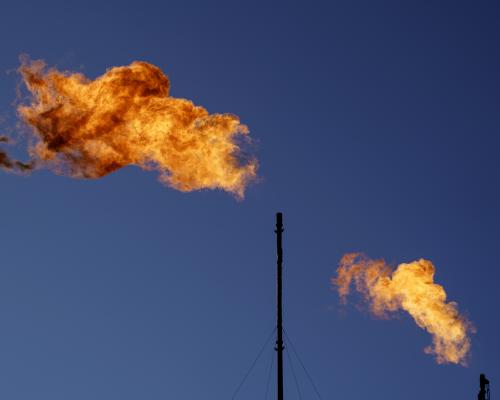
Turkmenistan has started plugging the mega-leaks of methane that spew from its ageing oil and gas facilities, the latest UN data shows, in a move hailed as a breakthrough.(土库曼斯坦已开始封堵其老化油气设施中喷涌的甲烷超级泄漏源,联合国最新数据显示,此举被誉为突破。)
联合国最新数据显示,土库曼斯坦已开始封堵其老化油气设施中喷涌而出的甲烷超级泄漏源,此举被誉为一项突破。
Methane, also called natural or fossil gas, is a potent(强效的,有力的) greenhouse gas. It trap(捕获,困住)s 80 times more heat than carbon dioxide and causes 25% of global heating today. Stopping leaks can be quick and cheap and, because methane breaks down in the atmosphere far quicker than CO2, this has a rapid impact, with some experts calling it the climate “emergency brake(紧急刹车,应急措施)”.
甲烷,又称天然气或化石气,是一种强效温室气体。它捕获热量的能力是二氧化碳的80倍,并导致当前全球升温的25%。阻止泄漏可以快速且廉价地实现,而且由于甲烷在大气中分解的速度远快于二氧化碳,这能产生立竿见影的效果,一些专家称之为气候的“紧急刹车”。
The Guardian revealed in 2023 that Turkmenistan was the worst country for methane mega-leaks. Sources in Turkmenistan said this scrutiny was the “critical step” in leading the secretive and authoritarian government to engage with foreign partners.(土库曼斯坦的消息人士称,这种关注是引导这个隐秘且专制的政府与外国伙伴接触的“关键一步”。)
《卫报》在2023年披露,土库曼斯坦是甲烷超级泄漏最严重的国家。土库曼斯坦的消息人士称,这种关注是引导这个隐秘且专制的政府与外国伙伴接触的“关键一步”。