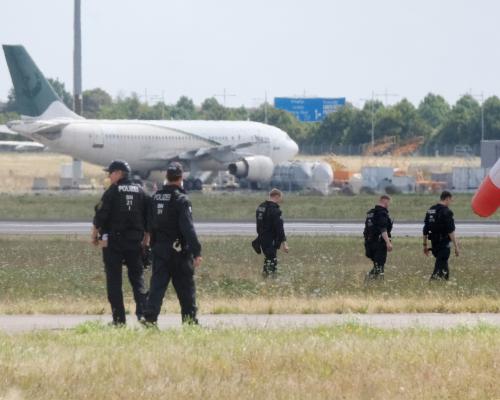
Even before the German government laid the blame this week on Russia for an attempted(未遂的,企图…的) drone attack at Leipzig airport, the topic of German ties to Moscow was high on the political agenda(在政治议程上占据重要位置).
甚至在德国政府本周将莱比锡机场未遂无人机袭击归咎于俄罗斯之前,德国与莫斯科关系的议题就已高居政治议程之上。
But the timing of the unsurprising yet explosive Leipzig announcement – days before a key regional vote – has exposed the extent to which German politics is polarised on the issue.(但莱比锡这一既不出人意料又极具爆炸性的声明,其时机恰逢关键地区投票前几天,暴露了德国政坛在此问题上的两极分化程度。)
但莱比锡这一既不出人意料又极具爆炸性的声明,其时机恰逢关键地区投票前几天,暴露了德国政坛在此问题上的两极分化程度。
Leading the polls nationally and in the state of Saxony-Anhalt, which votes this weekend, is the far-right(极右翼的) Alternative für Deutschland (AfD)(德国选择党,德国极右翼政党). The party has repeatedly called for a closer bond with the Kremlin, and crucially, for its cheap oil and gas to flow to Germany once again, despite Moscow’s unrelenting(无情的,持续不断的) onslaught(猛攻,攻击) on Ukraine.
在全国及本周末投票的萨克森-安哈尔特州民调中领先的是极右翼的德国选择党(AfD)。该党一再呼吁与克里姆林宫建立更紧密的关系,并且至关重要的是,呼吁俄罗斯的廉价石油和天然气再次流向德国,尽管莫斯科对乌克兰发动了无情的攻击。