Venice is a city of tradition and projection(投射;投影), a place feeding the imagination(激发想象力) of millions of people arriving from elsewhere. The “impossible city”, suspended on water, often appears unchanged, fixed in time. Yet, like the water that carries it, the city is in constant, subtle transformation.(然而,就像承载它的水一样,这座城市正处于持续而微妙的转变之中。)
威尼斯是一座传统与投射的城市,一个滋养着来自世界各地数百万人的想象力的地方。这座“不可能之城”悬浮于水上,常常显得一成不变,仿佛凝固在时间里。然而,就像承载它的水一样,这座城市正处于持续而微妙的转变之中。
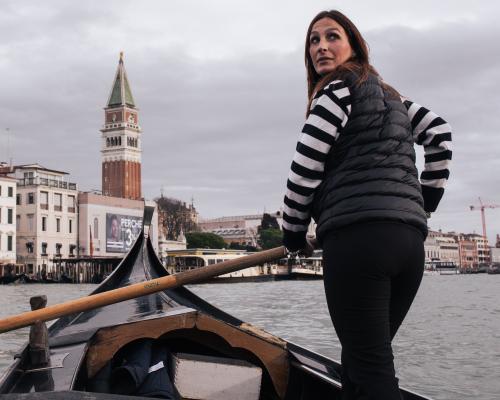
• Beatrice, 28, has been working as a gondolier(贡多拉船夫) for one year, pictured during a shift operating the traghetto(公共渡轮贡多拉) public-ferry gondola that crosses the Grand Canal
• 比阿特丽斯,28岁,担任贡多拉船夫已有一年,照片拍摄于她值班期间,当时她正操作着横渡大运河的公共渡轮贡多拉“traghetto”。
We often speak of Venice as if it were immobile(不动的,静止的). We call it timeless, suspended outside history(悬于历史之外), untouched by change. But Venice is changing. It is fragile, exposed, under pressure. On one side, rising sea levels and increasingly unpredictable tides are reshaping the lagoon and threatening a delicate equilibrium(平衡,均衡). On the other, mass tourism continues to transform the city from within. Homes become short-term rentals, local businesses give way to(让位于,被取代) visitor-oriented commerce, and residents leave the historic centre in steadily increasing numbers. The spaces left empty by those who move away are often filled by tourism itself, both a cause and a consequence of this transformation.(那些离开者留下的空置空间往往被旅游业本身填补,这既是这一转变的原因,也是其结果。)
我们常常谈论威尼斯,仿佛它是静止不动的。我们称它永恒,悬于历史之外,不受变化影响。但威尼斯正在改变。它脆弱、暴露、承受着压力。一方面,海平面上升和日益不可预测的潮汐正在重塑潟湖,威胁着微妙的平衡。另一方面,大众旅游持续从内部改变这座城市。住宅变成短期租赁,本地商业让位于面向游客的商业,居民以稳步增长的数量离开历史中心。那些离开者留下的空置空间往往被旅游业本身填补,这既是这一转变的原因,也是其结果。