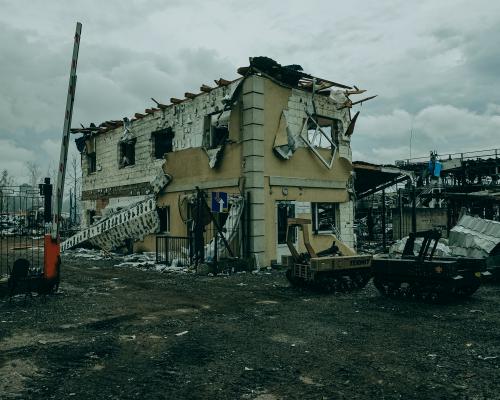
It is a day and a half since a Russian jet-powered drone smashed into(猛撞,撞毁) an ammunition dump(弹药堆集所,弹药库) in Myla, a village 15 miles outside central Kyiv. Volodymyr, 61, a security guard, leads visitors from his family’s badly damaged home, its roof blown off, back windows shattered, through the garden towards the impact site 300 metres away.(沃洛德米尔带领访客穿过花园走向爆炸现场。)
俄罗斯一架喷气式无人机撞上米拉村的一个弹药库,已经过去一天半了。米拉村位于基辅市中心15英里外。61岁的保安沃洛德米尔带领访客从他家受损严重的房子出发——屋顶被掀翻,后窗破碎——穿过花园,走向300米外的爆炸现场。
The garden, like so many in Ukraine’s villages and suburbs, is a sizeable allotment(小块菜地,分配地). But today the greenhouse is shattered, a vegetable patch is blackened(烧黑的,变黑的) and crisp(脆的,易碎的) underfoot. Several metres of grapevine have been destroyed. Even so(即便如此,尽管这样), Volodymyr finds two surviving bunches to hand to the Guardian.
这个花园和乌克兰许多村庄及郊区的花园一样,是一块相当大的菜地。但如今温室被毁,一片菜地烧焦,踩上去嘎吱作响。几米长的葡萄藤被摧毁。即便如此,沃洛德米尔还是找到了两串幸存的葡萄递给《卫报》记者。
It is a remarkable(非凡的,显著的) moment of generosity, though his family now has no electricity and no water after Thursday night’s extended(延长的,持续的) bombing. The death toll rose by one on Sunday, to 38, and four more people are still missing in an episode that has swiftly raised questions about why ammunition was stored so close to people’s homes.(死亡人数升至38人,另有四人失踪,事件引发对弹药储存位置的质疑。)
这是一个非凡的慷慨时刻,尽管在周四晚上的持续轰炸后,他的家人现在没有电也没有水。周日,死亡人数又增加一人,达到38人,另有四人仍下落不明。这一事件迅速引发质疑:为什么弹药被储存在离居民家如此近的地方?