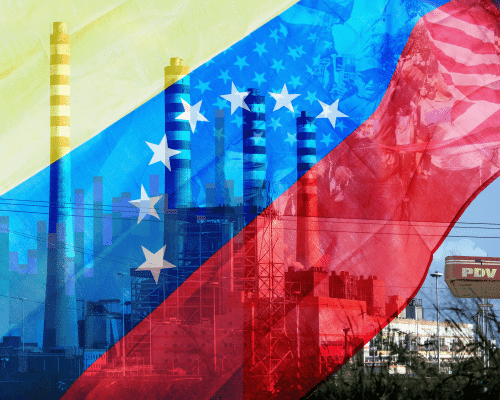
Written in the middle of the last century, the US Department of State memo conveys its message in a curt and undiplomatically honest tone: the glue that binds Washington to Caracas is, and is always likely to be, oil.(上世纪中叶撰写的美国国务院备忘录以简短直白、毫不外交辞令的口吻传达信息:将华盛顿与加拉加斯联系在一起的黏合剂是石油,而且很可能永远是石油。)
上世纪中叶撰写的一份美国国务院备忘录,以简短直白、毫不外交辞令的口吻传达了其信息:将华盛顿与加拉加斯联系在一起的黏合剂是石油,而且很可能永远是石油。
“All US policies toward Venezuela are affected in greater or less degree(或多或少地,在不同程度上) by the objective(目标,目的) of assuring an adequate(充足的,足够的) supply of petroleum for the US,” the 1950 document reads.
“美国对委内瑞拉的所有政策,都或多或少地受到确保美国获得充足石油供应这一目标的影响,”这份1950年的文件写道。
Decades later, little appears to have changed. After a brazen(肆无忌惮的,公然的) night-time kidnapping of the country’s leader earlier this year, Donald Trump announced last week that the US was taking majority control(多数控制权,控股权) over about a fifth of Venezuela’s oil reserves(储量,储备). That deal, according to the White House, “secures our energy dominance for the next century”. How much it will benefit Venezuelans is yet to be seen.(它将给委内瑞拉人带来多大好处,尚待观察。)
几十年后,情况似乎没什么改变。在今年早些时候公然夜间绑架该国领导人之后,唐纳德·特朗普上周宣布,美国将取得委内瑞拉约五分之一石油储量的多数控制权。据白宫称,这笔交易“确保我们未来一个世纪的能源主导地位”。它将给委内瑞拉人带来多大好处,尚待观察。