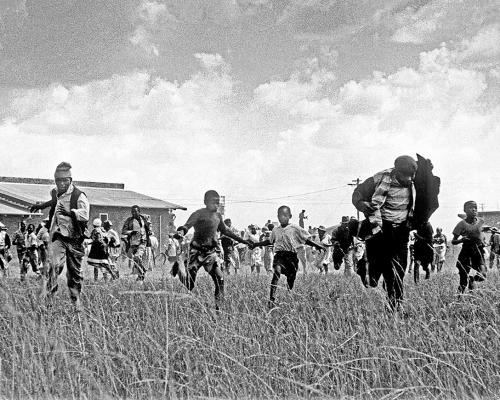
The day dawned(破晓;开始出现) brightly on 21 March 1960, as residents of the South African township((南非)黑人城镇) of Sharpeville gathered to protest against pass laws(通行证法(南非种族隔离法律)), which forced “Black, Indian and Coloured” South Africans to carry documents at all times specifying where they were allowed to be.
1960年3月21日,天色明亮,南非沙佩维尔镇的居民聚集起来抗议通行证法。该法强制“黑人、印度人和有色人”南非人随时携带证件,注明他们被允许去的地方。
Abraham Mofokeng joined the march, one of dozens organised nationwide by the Pan Africanist Congress (PAC), a breakaway(脱离的;分裂出去的) group from the African National Congress (ANC). “The weather was very nice, the sun was out. You could not have suspected that the day would go so horribly,” said Mofokeng, who was then a 20-year-old factory worker.(你根本不会想到这一天会变得如此可怕,”当时20岁的工厂工人莫福肯说。)
亚伯拉罕·莫福肯参加了这场游行,这是泛非主义者大会(PAC)在全国组织的数十场游行之一。PAC是从非洲人国民大会(ANC)分裂出来的团体。“天气很好,阳光明媚。你根本不会想到这一天会变得如此可怕,”当时20岁的工厂工人莫福肯说。
Mofokeng, now 86, was among the thousands gathered peacefully outside the police station in Sharpeville, which is about 40 miles south of Johannesburg in a heavily industrialised(工业化的) region known as the Vaal Triangle(瓦尔三角(南非工业区)).
现年86岁的莫福肯是聚集在沙佩维尔警察局外和平抗议的数千人之一。沙佩维尔位于约翰内斯堡以南约40英里,地处被称为瓦尔三角的重工业区。