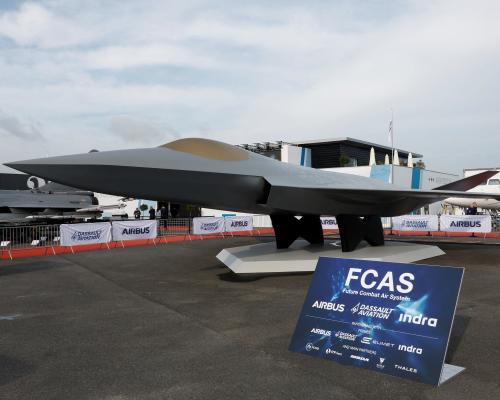
When the former European Central Bank president and Italian prime minister Mario Draghi laid out(提出,阐述) a plan for Europe to catch up economically(在经济上追赶) with the US and China, collaborating on defence was one of the prescriptions(药方,处方;对策). No more should each country in Europe try to make its own version of a boat, tank or jet but instead share costs and technologies between allies.(欧洲各国不应再各自制造自己的船只、坦克或战斗机,而应在盟友之间分摊成本、共享技术。)
当欧洲央行前行长、意大利前总理马里奥·德拉吉提出欧洲在经济上追赶美国和中国的计划时,防务合作是其中的一剂药方。欧洲各国不应再各自制造自己的船只、坦克或战斗机,而应在盟友之间分摊成本、共享技术。
Europe appears to have fallen at the first hurdle(在第一道障碍前就失败了). The German chancellor, Friedrich Merz, and the French president, Emmanuel Macron, were forced to cancel the joint future combat air system in June, after fraught(充满(问题、危险)的) efforts to work together since 2018.
欧洲似乎在第一道障碍前就摔倒了。德国总理弗里德里希·默茨和法国总统埃马纽埃尔·马克龙在6月被迫取消联合未来作战空中系统项目,此前两国自2018年以来为合作付出了艰辛努力。
The question exercising(使困扰,使担忧) defence executives over the summer since then is: what happens now? France appears to be content to push ahead with(推进,推行) its own fighter jet but Germany has been left questioning whether it will have its own aircraft. It may instead be left as a secondary(次要的,第二的) customer to the rival Tempest jet under the global combat air programme (GCAP) led by the UK, Italy and Japan.
自那以后,整个夏天防务高管们都在思考的问题是:接下来会发生什么?法国似乎满足于推进自己的战斗机项目,而德国却一直在质疑自己是否还能拥有自己的战机。德国可能反而沦为英国、意大利和日本主导的全球作战空中计划(GCAP)下“暴风”战斗机的次要客户。