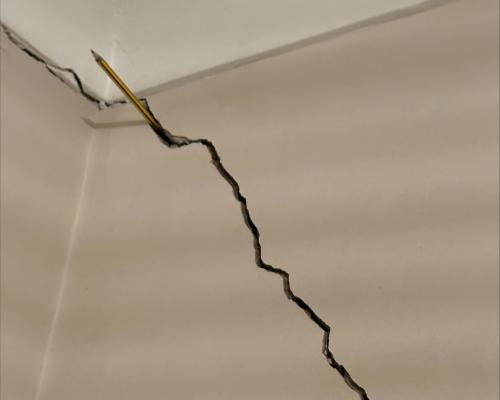
“We’ve got one wall with an absolutely huge diagonal(对角线的;斜的) crack, through which we can see through to the other room; you could easily put your fingers in it and chunks of plaster(灰泥;石膏) are falling off(脱落;掉落),” says Henry Biggs, 49, from Stroud in Gloucestershire.
“我们有一面墙上有一条巨大的斜裂缝,透过它能看到隔壁房间;你的手指可以轻松伸进去,灰泥块不断掉落,”来自格洛斯特郡斯特劳德的49岁亨利·比格斯说。
He and his partner started noticing cracks in their family home in June 2025, a few months after buying it, and filed an insurance claim for subsidence(地基沉降;地面下陷) that was accepted by their insurer, Admiral, in the spring. Monitoring devices were only recently fitted, about a year after they first submitted the claim, and they have no idea when the damage might start to be repaired.(监测设备直到最近才安装,距离他们首次提交索赔已过去约一年,他们不知道损坏何时才能开始修复。)
他和伴侣在2025年6月开始注意到家中的裂缝,当时他们买下这栋房子才几个月。他们提交了地基沉降保险索赔,并在今年春天获得了保险公司Admiral的受理。监测设备直到最近才安装,距离他们首次提交索赔已过去约一年,他们不知道损坏何时才能开始修复。
They are among a growing number of UK homeowners who face subsidence after two record-hot summers. August was the joint-hottest(并列最热的) month ever recorded around the world. Signs of subsidence include widening and lengthening diagonal cracks, typically around window and door frames, as well as sloping floors, and sticking doors and windows.(地基沉降的迹象包括不断加宽和延长的斜裂缝,通常出现在窗框和门框周围,以及地板倾斜、门窗卡滞。)
他们是越来越多面临地基沉降的英国房主中的一员,此前经历了两个创纪录的炎热夏季。八月是有记录以来全球最热的月份之一。地基沉降的迹象包括不断加宽和延长的斜裂缝,通常出现在窗框和门框周围,以及地板倾斜、门窗卡滞。