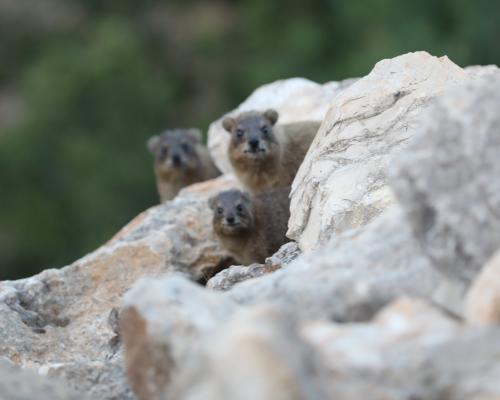
Wars are usually measured in the number of people killed, homes destroyed and towns erased. Far less attention is paid to what happens beneath the rubble(在废墟之下). Across southern Lebanon, repeated large-scale detonations are not only causing human tragedy by demolishing villages, they are also destroying the ancient limestone habitats that have sheltered colonies of rock hyrax for centuries.(在黎巴嫩南部,反复的大规模爆破不仅摧毁村庄,造成人间悲剧,也在破坏古老的石灰岩栖息地——几个世纪以来,岩蹄兔的群落一直栖身于此。)
衡量战争,通常看的是死亡人数、被毁房屋和消失的城镇。而废墟之下发生的一切,却鲜有人关注。在黎巴嫩南部,反复的大规模爆破不仅摧毁村庄,造成人间悲剧,也在破坏古老的石灰岩栖息地——几个世纪以来,岩蹄兔的群落一直栖身于此。
As founder and president of Green Southerners, an environmental organisation documenting the ecological effects of war in southern Lebanon, I have been helping colleagues to record the damage inflict(造成,施加(伤害))ed on forests, wildlife and fragile ecosystems(脆弱的生态系统) across the border region.
作为“绿色南方人”的创始人和主席——该环保组织致力于记录黎巴嫩南部战争的生态影响——我一直协助同事记录边境地区森林、野生动物和脆弱生态系统所遭受的破坏。
The Syrian rock hyrax (Procavia capensis syriaca), locally known as tabsoun, depends almost entirely on the fissure(裂缝,裂隙)s and cavities of karstic(喀斯特的) limestone for shelter and on sparse(稀疏的) coastal vegetation for food. We have monitored colonies of the species for years, but over the past few months, our team has watched many of their familiar habitats disappear beneath bombings and demolitions.(我们监测该物种的群落已有多年,但在过去几个月里,我们的团队目睹了许多它们熟悉的栖息地在轰炸和拆除中消失。)
叙利亚岩蹄兔(学名 Procavia capensis syriaca),当地人称之为 tabsoun,几乎完全依赖喀斯特石灰岩的裂隙和洞穴作为庇护所,并以稀疏的海岸植被为食。我们监测该物种的群落已有多年,但在过去几个月里,我们的团队目睹了许多它们熟悉的栖息地在轰炸和拆除中消失。