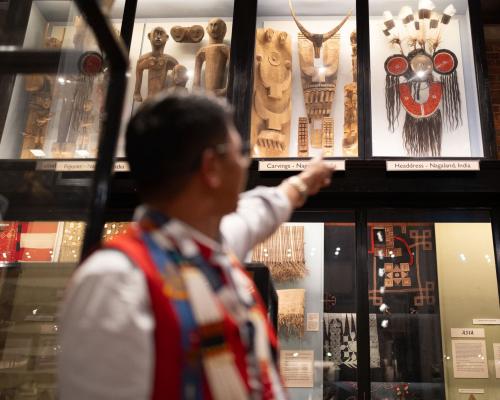
Anthropologists and community leaders from Nagaland, a remote state in north-eastern India bordering Myanmar, have expressed joy and relief that human remains belonging to their ancestors that had been on display in a British museum for nearly a century are finally being returned.(来自那加兰邦的人类学家和社区领袖表示,他们感到喜悦和宽慰,因为属于他们祖先的遗骸在英國博物馆展出近一个世纪后,终于要归还了。)
那加兰邦是印度东北部一个与缅甸接壤的偏远邦。来自该邦的人类学家和社区领袖表示,他们感到喜悦和宽慰,因为属于他们祖先的遗骸在英國博物馆展出近一个世纪后,终于要归还了。
On Monday, the Pitt Rivers Museum in Oxford announced that 39 pieces of human remains – including parts of skulls, a finger and a piece of skin with hair – belonging to the Naga tribes, will be returned to Nagaland after six years of negotiation between the community and the museum.(周一,牛津皮特·里弗斯博物馆宣布,经过社区与博物馆六年的谈判,属于那加部落的39件人体遗骸——包括部分头骨、一根手指和一块带毛发的皮肤——将归还那加兰邦。)
周一,牛津皮特·里弗斯博物馆宣布,经过社区与博物馆六年的谈判,属于那加部落的39件人体遗骸——包括部分头骨、一根手指和一块带毛发的皮肤——将归还那加兰邦。
For the Nagas, the repatriation is not just about “bones and ancestral remains … It is about memory returning to where it belongs,” the community said in a statement.(那加社区在一份声明中说,对他们而言,归还不仅仅是“骨骸和祖先遗骸……而是记忆回归其所属之地”。)
那加社区在一份声明中说,对他们而言,归还不仅仅是“骨骸和祖先遗骸……而是记忆回归其所属之地”。