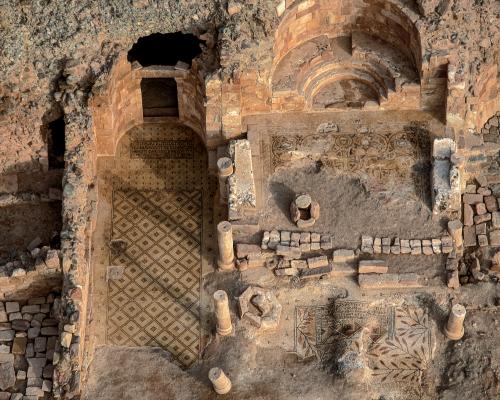
High above the Dead Sea’s south-eastern shore, pilgrims once climbed to a cave they believed had sheltered Lot after he fled the destruction of Sodom.(在死海东南岸的高处,朝圣者们曾攀登到一个洞穴,他们相信那是罗得逃离所多玛毁灭后避难的地方。) For centuries the site survived(幸存,留存) in Christian memory alone, visited by occasional pilgrims such as St Stephen the Sabaite, until the Greek archaeologist Konstantinos Politis, who has died aged 67 following a series of(一系列) strokes, began excavating in 1988.
在死海东南岸的高处,朝圣者们曾攀登到一个洞穴,他们相信那是罗得逃离所多玛毁灭后避难的地方。几个世纪以来,这个遗址仅存在于基督徒的记忆中,偶尔有像圣斯蒂芬·萨巴伊特这样的朝圣者来访,直到希腊考古学家康斯坦丁诺斯·波利蒂斯(因一系列中风去世,享年67岁)于1988年开始发掘。
He uncovered a Byzantine basilica(长方形基督教堂) built over the mouth of the cave, its floors still adorned(装饰) with mosaics(马赛克镶嵌画) laid in the sixth and seventh centuries CE. The discovery, at Deir ’Ain ’Abata, gave physical form to(赋予实体形态) one of the Bible’s most vivid stories and set the course for(为……指明方向) a career spent excavating and protecting the archaeology of Jordan’s Dead Sea shore.
他发掘出一座拜占庭式长方形教堂,建在洞口之上,教堂地面仍装饰着公元六、七世纪铺设的马赛克。这一发现位于代尔阿因阿巴塔,为圣经中最生动的故事之一赋予了实体形态,也为他毕生致力于发掘和保护约旦死海沿岸考古遗迹的事业指明了方向。
Dino, as Politis was widely known, excavated(发掘) the Sanctuary of Lot over seven seasons between 1988 and 1996. The site had been identified by an archaeological survey in 1986 as matching a sanctuary depicted on the famous sixth-century mosaic map at Madaba in Jordan, whose location had eluded archaeologists for more than a century.(该遗址在1986年的一次考古调查中被认定与约旦马代巴著名的六世纪马赛克地图上描绘的圣所相符,而该圣所的位置已让考古学家困惑了一个多世纪。)
迪诺(波利蒂斯的广为人知的昵称)在1988年至1996年间,用了七个发掘季发掘了罗得圣所。该遗址在1986年的一次考古调查中被认定与约旦马代巴著名的六世纪马赛克地图上描绘的圣所相符,而该圣所的位置已让考古学家困惑了一个多世纪。