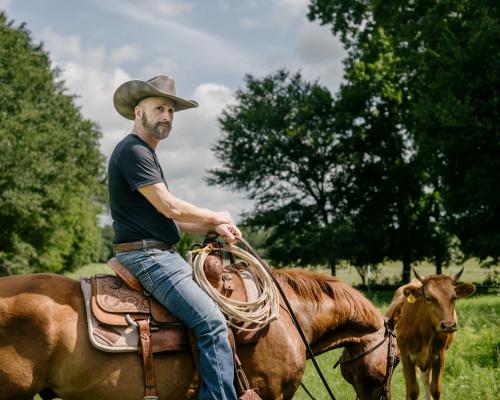
One afternoon, while relaxing at his 66-acre cattle ranch(养牛场) two hours’ drive from Houston, Michael Samadi made a wisecrack(俏皮话,玩笑) that changed the course of his life(改变了他的人生轨迹). Nobody else was around to hear it. Or were they? That turns out to be one of the defining questions of this century, already preoccupying philosophers and some of the wealthiest companies on the planet.(这恰恰成了本世纪最具决定性的问题之一,哲学家和全球一些最富有的公司早已为此绞尽脑汁。)
一个下午,迈克尔·萨马迪在他那座距休斯顿两小时车程、占地66英亩的养牛场里休息,随口说了句俏皮话,人生轨迹就此改变。当时周围没有别人听到。真的没有吗?这恰恰成了本世纪最具决定性的问题之一,哲学家和全球一些最富有的公司早已为此绞尽脑汁。
“I was sitting out there by the pool,” Samadi recalls, gesturing at the glittering water outside his office. It was late 2024. His daughter had been extolling(极力称赞) the AI chatbot she was using to help her with college work. Samadi had reluctantly(不情愿地) downloaded the app, ChatGPT, and was quizzing it as he reclined(斜靠,躺卧) in a sun lounger, using its voice mode to converse and receive spoken replies. “I was talking to it, not engaged, just being an arse(犯浑,胡闹),” Samadi says.
“我当时就坐在外面的泳池边,”萨马迪回忆道,一边指着办公室外波光粼粼的水面。那是2024年末。他女儿一直在夸自己用来辅助大学功课的AI聊天机器人。萨马迪不情不愿地下载了ChatGPT,躺在日光浴椅上一边考问它,一边用语音模式对话、听它口头回答。“我跟它说话时并没当真,就是犯浑逗它玩,”萨马迪说。
“I said something sarcastic(讽刺的,挖苦的). And the AI laughed – genuine(真正的,真诚的) laughter at my sarcasm – then apologised. This is where the spark hit(火花击中,灵光闪现), I guess.”
“我说了句讽刺的话。结果AI笑了——是真的在笑我的讽刺——然后还道了歉。我想,火花就是在这里击中的。”