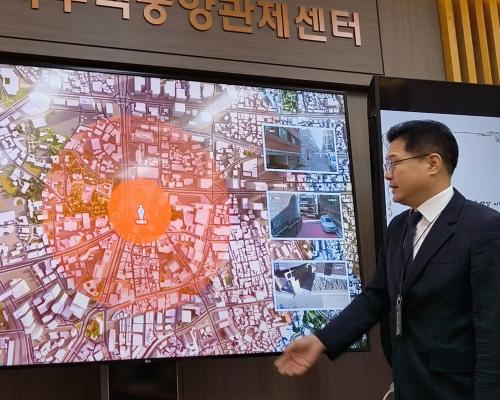
On a large screen in a control centre(控制中心) in eastern Seoul, a dot representing a man closes in on(逼近,靠近) a woman. The dot changes direction, and the distance reading(距离读数) between them falls from 845 metres to 792.
在首尔东部一个控制中心的大屏幕上,一个代表男性的圆点正逼近一个代表女性的圆点。圆点改变方向,两者之间的距离读数从845米降到792米。
On the woman’s phone, the same map is loading. A probation officer(缓刑监督官) rings her: the stalker is approaching, don’t panic, officers have been dispatch(派遣,派出)ed. The man is a stand-in(替身,替代者) and the scenario is staged(刻意安排的,演练的), but the system is real.
在女性的手机上,同一张地图正在加载。一名缓刑监督官打电话给她:跟踪骚扰者正在靠近,不要惊慌,警员已经派出。这名男子是替身,场景是演练的,但系统是真实的。
Since late June, a stalking survivor in South Korea can open an app and watch a tagged perpetrator(加害者,施害者) move in real time(实时地) once they come within a 2km radius(半径,范围). If they come within a kilometre, an alert is passed to police and probation authorities, who call the victim. Previously, survivors received only a text message stating a distance, with no indication of(没有任何……的提示) location. About 400 people are now enrol(加入,注册)led in the new scheme.
自六月下旬起,韩国的跟踪骚扰幸存者可以打开一款应用,一旦被标记的加害者进入2公里半径范围,就能实时查看其移动轨迹。如果进入1公里范围,警报会传给警方和缓刑部门,由他们致电受害者。此前,幸存者只会收到一条短信,说明距离,却不显示位置。目前约有400人加入了这项新计划。
19,000 alerts a day
每天1.9万条警报