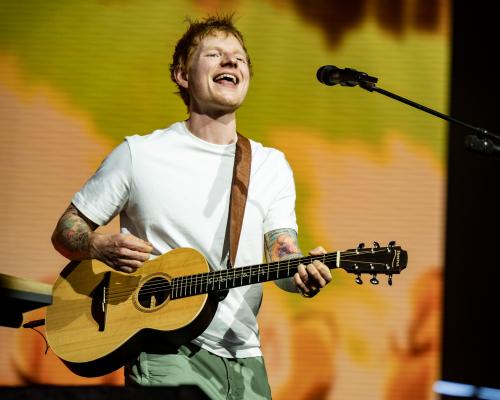
It must have come as a surprise to Ed Sheeran when all of his support acts(暖场嘉宾) withdrew from the remainder of the US leg of his tour. The American rapper Macklemore had triggered the walkout(集体退场) when he gave an impassioned(激昂的) speech calling for a “free Palestine” on stage and was dropped for doing so. The decision by the remaining acts to drop out in solidarity(为声援而退出) exposed a deep divide in the modern music industry. Some artists still insist on keeping politics out of music, while others expect music to speak to our perilous(危机四伏的) times.
当所有暖场嘉宾退出艾德·希兰美国巡演余下场次时,他一定感到意外。美国说唱歌手麦克勒莫尔在台上发表激昂演讲、呼吁“解放巴勒斯坦”,因此被取消演出资格,从而引发了这场集体退出。其余艺人为了声援他而选择退出,这一决定暴露出当代音乐产业的深刻分裂。一些艺人仍坚持让政治远离音乐,另一些艺人则期待音乐能回应我们这个危机四伏的时代。
After he was dropped, Macklemore wrote that Sheeran’s “typical apolitical(不问政治的) stance was being challenged in a way it never had been before”, to which Sheeran responded: “I am not complicit(同谋的)” and “those who come to my shows do not expect a political forum(政治论坛)”.
被取消演出资格后,麦克勒莫尔写道,希兰“那种典型的不问政治立场,正以从未有过的方式受到挑战”。希兰则回应说:“我不是同谋”,以及“来看我演出的人并不期待一个政治论坛”。
I think that the concept of expectation is worth probing. The idea that artists should make their political sentiments known is often dismissed as a parasocial(准社会的) delusion, one particularly rampant(猖獗的) among young people on social media who “call out(公开声讨)” musicians for their silence (indeed, young people are far more likely to be in favour of musicians using their concerts to make political statements). Artists aren’t politicians, the criticism goes, and to consider them as such distracts from, even compromises, the purpose of art as a forum for personal expression and of escapism.(批评者的逻辑是:艺人不是政客,把他们当作政客,会分散甚至损害艺术作为个人表达和逃避现实之场所的宗旨。) In other words, why not just enjoy the music instead of expecting activism from musicians, too?
我认为“期待”这个概念值得深究。认为艺人应当公开表达政治情感,这种想法常被斥为一种“准社会关系妄想”,在社交媒体上尤其盛行于那些因音乐人沉默而“声讨”他们的年轻人之中(事实上,年轻人远更倾向于支持音乐人利用演唱会发表政治声明)。批评者的逻辑是:艺人不是政客,把他们当作政客,会分散甚至损害艺术作为个人表达和逃避现实之场所的宗旨。换言之,为什么不干脆享受音乐,而非要对音乐人抱有行动主义的期待呢?