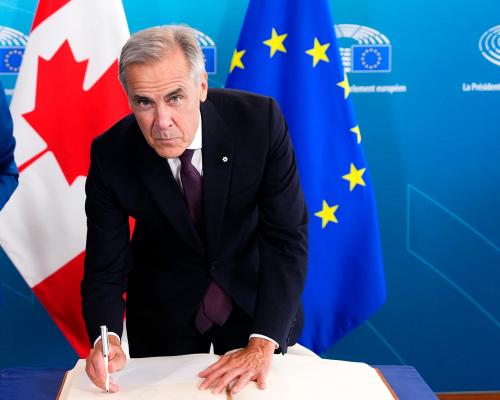
Ursula von der Leyen brought a new mascot(吉祥物) to her annual State of the Union address(欧盟盟情咨文) to the European parliament: the Canadian prime minister, Mark Carney.
乌尔苏拉·冯德莱恩在向欧洲议会发表年度盟情咨文时,带来了一位新“吉祥物”:加拿大总理马克·卡尼。
The leader of a plucky, like-minded liberal democracy, locked in an unsought trade war with its much bigger bully of a neighbour, Carney crossed the Atlantic and attended this flagship event of Europe’s political calendar to demonstrate his country’s shared values and desire to get closer to the EU.(卡尼领导着一个勇敢无畏、志同道合的民主国家,正与强大得多的邻国恶霸陷入一场非自愿的贸易战。他跨越大西洋,出席欧洲政治日程上的这一旗舰活动,以展示两国共同的价值观和靠近欧盟的意愿。) He was rewarded with a standing ovation(起立鼓掌) and the first ever offer of an (invented) status of “associate member(准会员)” of the EU.
卡尼领导着一个勇敢无畏、志同道合的自由民主国家,正与比自己强大得多的邻国恶霸陷入一场并非自愿的贸易战。他跨越大西洋,出席欧洲政治日程上的这一旗舰活动,以展示两国共同的价值观以及靠近欧盟的意愿。他得到的回报是全场起立鼓掌,以及欧盟首次提出的(凭空发明的)“准会员”身份。
The grand-sounding title is more a gesture of political support and reciprocal(相互的) affection than any sort of binding(有约束力的) engagement. The EU doesn’t have associate membership in its founding treaties. It does make association agreements(欧盟联系协定) with close countries, some of which eventually join the bloc(集团、阵营). It also has partnership, trade and cooperation agreements with more distant friends – it had one with Russia, in happier times.(欧盟也与关系较远的友邦签订伙伴关系、贸易和合作协定——在关系尚好的时候,欧盟还与俄罗斯签过一份。)
这个听起来宏大的头衔,与其说是任何形式的约束性承诺,不如说是一种政治支持和相互示好的姿态。欧盟的基础条约中并没有“准会员”这一身份。欧盟确实与关系密切的国家签订联系协定,其中一些国家最终加入了欧盟。欧盟也与关系较远的友邦签订伙伴关系、贸易和合作协定——在关系尚好的时候,欧盟还与俄罗斯签过一份。