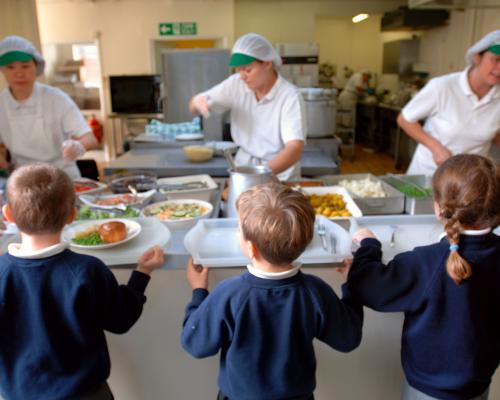
More than 20 years ago, when I started the campaign and TV series School Dinners, I couldn’t believe that we had standards for dog food but no standards for the food we fed our children at school. I have never, and will never, stop banging that drum – even after this week’s momentous announcement on school food standards in England.(我从未停止、也永远不会停止为此奔走呼号——即便本周英格兰校园食品标准迎来了重大宣布。) Because it is so important we remember where we started from.
20多年前,当我发起“校园餐”运动和电视系列节目时,我简直不敢相信:狗粮都有标准,可我们在学校给孩子吃的食物却没有标准。我从未停止、也永远不会停止为此奔走呼号——即便本周英格兰校园食品标准迎来了重大宣布。因为记住我们从哪里出发,实在太重要了。
Children in the state sector(公立部门,公立学校体系) are at school for 190 days a year. And if they’re eating breakfast and lunch there, the majority of what they consume(摄入,消耗) each day is in the hands of(由……掌控,在……手中) their school. When we know that children are consuming less than half the recommended fruit and vegetables, but twice the recommended sugar, school food is a massive opportunity to directly improve diets at scale.(当我们知道孩子们摄入的水果蔬菜不到推荐量的一半,糖却是推荐量的两倍时,校园餐就是一个大规模直接改善饮食的巨大机会。)
公立学校的孩子每年在校190天。如果他们在那儿吃早餐和午餐,那么他们每天摄入的大部分食物都掌握在学校手里。我们知道,孩子们摄入的水果蔬菜不到推荐量的一半,糖却是推荐量的两倍,因此校园餐是一个大规模直接改善饮食的巨大机会。
But eating good food around a shared table(共享的餐桌,共同进餐) isn’t just important for children’s health. It’s a core part of a child’s social connection and sense of belonging(归属感). Well-fed kids are happier, have more energy and fewer days off school due to sickness, and their learning and behaviour improve, too.(吃得好的孩子更快乐,精力更充沛,因病缺课更少,学习和行为也都会改善。)
但围坐一桌吃好饭,不仅仅对孩子的健康重要。它还是孩子社会联系和归属感的核心部分。吃得好的孩子更快乐,精力更充沛,因病缺课更少,学习和行为也都会改善。