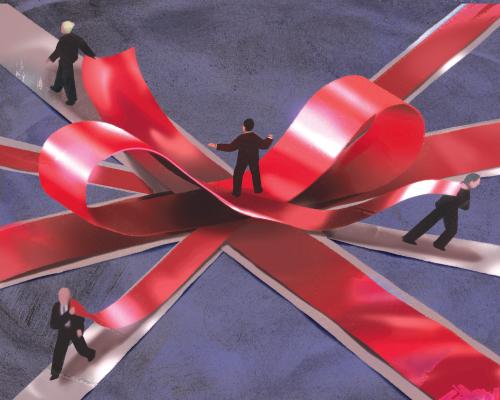
Monday must have been a historical first. Never before have three of the four “nations” of the United Kingdom jointly demanded freedom to vote for its dissolution(解散,解体). Scotland, Wales and Northern Ireland have lost confidence in(对……失去信心) England. They declared in Cardiff that the unionist government at Westminster is “coming to an end”.
周一想必是历史上头一遭。联合王国四个“民族”中的三个,从未像这样联合起来,要求获得投票解散联合王国的自由。苏格兰、威尔士和北爱尔兰已经对英格兰失去信心。它们在加的夫宣布,威斯敏斯特的联合主义政府“正在走向终结”。
There was no such Celtic alliance against the Normans, Edward I or Cromwell. Celtic MPs have never formed a voting coalition in parliament. The Victorian Liberal party advanced “home rule(地方自治,尤指爱尔兰在联合王国内部的自治) for all”, but that was not independence and it got nowhere. Ireland rebelled, but it did so alone. When this eventually succeeded, Britain said good riddance(说“走了正好”,表示庆幸摆脱), kept hold of Belfast and continued to centralise(使集中,中央集权化) power in London.
当年对抗诺曼人、爱德华一世或克伦威尔的,都没有过这样的凯尔特联盟。凯尔特裔议员从未在议会中组成过投票联盟。维多利亚时代的自由党曾提出“人人享有地方自治”,但那不是独立,而且毫无进展。爱尔兰反抗过,但它是孤军奋战。当这场反抗最终成功时,英国说“走了正好”,却仍牢牢抓住贝尔法斯特,并继续把权力集中到伦敦。
So this is serious stuff. Yet London politics this week treated the declaration as on a par with(与……同等,不相上下) the Oxfordshire village of Piddington voting to go it alone(单干,独自行动) to ward off(抵挡,防止) the possibility of asylum seekers being housed nearby.
所以这是件严肃的大事。然而本周伦敦政坛对待这份声明的态度,却把它等同于牛津郡的皮丁顿村为阻止附近安置寻求庇护者而投票“单干”一样。