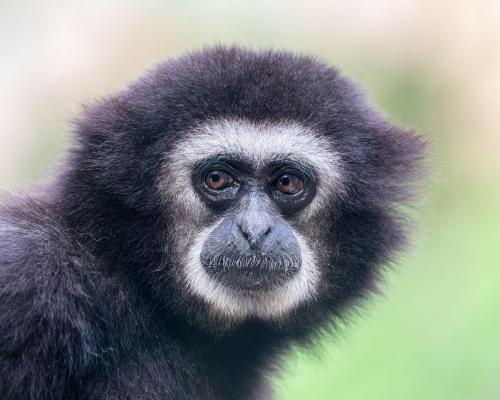
Dawn has broken(天刚破晓), and the air is cool and still. It’s at about this time that gibbons usually erupt into song, wa-oo-ing and wa-ing from the highest branches and filling the tree tops with rich melodies.(大约就在这个时候,长臂猿通常会突然放声歌唱,从最高的枝头发出“哇呜”“哇”的叫声,让浓郁的旋律充满树冠。) But in this corner of Malaysian forest, bordered by housing and roads, the resident(常驻的) white-handed gibbons are quiet. All that can be heard is the hum(嗡嗡声) of traffic from a nearby highway.
天刚破晓,空气清凉而静谧。大约就在这个时候,长臂猿通常会突然放声歌唱,从最高的枝头发出“哇呜”“哇”的叫声,让浓郁的旋律充满树冠。但在这片被住宅和道路环绕的马来西亚森林一角,常驻的白掌长臂猿却一片沉寂。能听到的只有附近高速公路上车流的嗡嗡声。
This isn’t a rare occurrence for this group of gibbons, according to research, which found these particular gibbons, named Mambang and Walinong, appeared to be producing far fewer morning songs than others that are not exposed to the same level of traffic noise.(根据研究,这对长臂猿来说并非偶然现象。研究发现,这两只名叫曼邦和瓦利农的长臂猿清晨鸣唱的次数,似乎远少于那些没有暴露在同等交通噪音中的同类。)
根据研究,这对长臂猿来说并非偶然现象。研究发现,这两只名叫曼邦和瓦利农的长臂猿清晨鸣唱的次数,似乎远少于那些没有暴露在同等交通噪音中的同类。
White-handed gibbons, arboreal animals whose calls can travel more than half a mile through dense forest canopies, are known for their complex songs and vocal techniques that have been likened to those of soprano singers.(白掌长臂猿是树栖动物,它们的叫声能穿过茂密的森林树冠传出半英里以上。它们以复杂的歌声和发声技巧闻名,这些技巧常被比作女高音歌唱家的演唱。) But as their habitats are increasingly fragment(使破碎、分割)ed by roads, industry and urban development, researchers say there is a growing need to understand how human-generated noise(人为噪音) is affecting when and how they sing.
白掌长臂猿是树栖动物,它们的叫声能穿过茂密的森林树冠传出半英里以上。它们以复杂的歌声和发声技巧闻名,这些技巧常被比作女高音歌唱家的演唱。但随着栖息地被道路、工业和城市开发日益切割,研究人员表示,越来越有必要了解人为噪音正在如何影响它们鸣唱的时机和方式。