Summer is at an end(结束,到头了), and suddenly spiders seem to be everywhere – in your house, in your garden, in your hair. Fresh webs hang from doorways, walls, shrubs(灌木) and fence posts, creating invisible obstacle courses(障碍赛道). Where do all these spiders come from, what kind are they and what, if anything, should we do about them?(这些蜘蛛都是从哪儿来的?它们是什么种类?我们又该拿它们怎么办——如果真需要做点什么的话?)
夏天结束了,忽然之间蜘蛛似乎无处不在——在你家里,在你花园里,甚至在你头发里。新结的蛛网挂在门口、墙壁、灌木和栅栏柱上,织成一道道看不见的障碍赛道。这些蜘蛛都是从哪儿来的?它们是什么种类?我们又该拿它们怎么办——如果真需要做点什么的话?
The short answer to the question “Why are there so many more spiders at this time of year?” is: there aren’t. They are just more obvious. Dave Clarke, an ectotherm(变温动物,冷血动物) (“cold-blooded” animal) specialist at the Zoological Society of London(伦敦动物学会,英国著名动物学与保护机构), says: “There are more spiders around in the spring, because that’s when they hatch from their egg sacs, and there are hundreds of babies in each egg sac.(春天蜘蛛其实更多,因为那时它们从卵囊里孵化出来,每个卵囊里有几百只幼蛛。) But they’re small and not very obvious. They grow up during the summer and, at this time of year, they reach their maximum size.” Their webs are also correspondingly(相应地) larger.
对于“为什么每年这个时候蜘蛛会多这么多?”这个问题,简短的回答是:并没有变多。它们只是更显眼了。伦敦动物学会的变温动物(即“冷血”动物)专家戴夫·克拉克说:“春天蜘蛛其实更多,因为那时它们从卵囊里孵化出来,每个卵囊里有几百只幼蛛。但它们很小,不太显眼。它们在整个夏天长大,到了每年这个时候,体型达到最大。”它们的蛛网也相应地更大。
The other reason they are more apparent(明显的,显而易见的) is that they are finding their way(摸索着找到路) indoors in the desperate search for(拼命寻找) a mate(配偶,交配对象). Dr Sara Goodacre, professor of evolutionary biology and genetics at the University of Nottingham(诺丁汉大学,英国著名研究型大学), says: “The ones you see in your home at the minute, the really big, fat, hairy ones, they’re usually teenage males that are lost – emotionally, geographically – and are just hoping they might find a female so they can continue the life cycle.(你现在在家里看到的那些,又大又肥、毛茸茸的,通常是迷路的“青少年”雄蛛——情感上迷路,地理上也迷路——它们只是希望能找到一只雌蛛,好把生命循环延续下去。)”
它们更显眼的另一个原因,是它们正拼命寻找配偶,一路摸进了室内。诺丁汉大学进化生物学与遗传学教授萨拉·古达克博士说:“你现在在家里看到的那些,又大又肥、毛茸茸的,通常是迷路的‘青少年’雄蛛——情感上迷路,地理上也迷路——它们只是希望能找到一只雌蛛,好把生命循环延续下去。”
1. House spider (Tegenaria domestica)
1. 家蛛(Tegenaria domestica)
2. Cardinal spider (Tegenaria parietina)
2. 红衣主教蛛(Tegenaria parietina)
3. Cellar spider (Pholcus phalangioides)
3. 幽灵蛛(Pholcus phalangioides)
4. Garden spider (Araneus diadematus)
4. 园蛛(Araneus diadematus)
5. False Widows (Steatoda nobilis, Steatoda bipunctata, Steatoda grossa)
5. 假寡妇蛛(Steatoda nobilis、Steatoda bipunctata、Steatoda grossa)
6. Missing sector orb weaver (Zygiella x-notata)
6. 缺扇形圆网蛛(Zygiella x-notata)
7. Tube web spider (Segestria florentina)
7. 管网蛛(Segestria florentina)
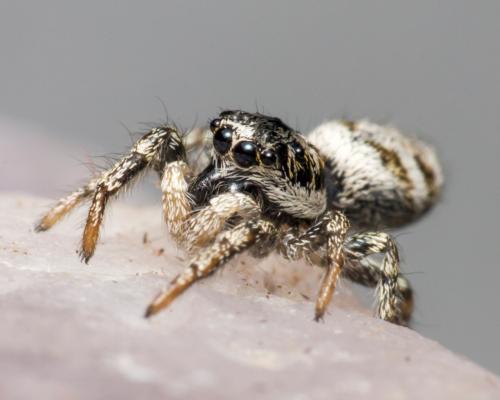
8. Zebra jumping spider (Salticus scenicus)
8. 斑马跳蛛(Salticus scenicus)
9. False wolf spider (Zoropsis spinimana)
9. 假狼蛛(Zoropsis spinimana)
10. Woodlouse spider (Dysdera crocata)
10. 鼠妇蛛(Dysdera crocata)