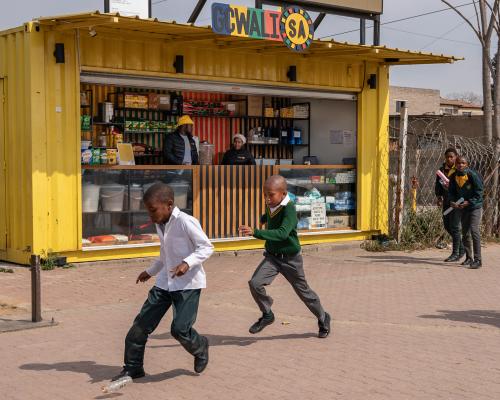
Every morning, on her way to the laundry(洗衣店) shop she runs in Johannesburg’s Alexandra township((南非)镇区), Tsholofelo Mphela stops at a bright yellow shipping container to buy a few spoonfuls of sugar(几勺糖).
每天早上,在去约翰内斯堡亚历山德拉镇自己经营的洗衣店的路上,措洛费洛·姆菲拉都会在一个亮黄色的集装箱前停下,买几勺糖。
Inside, shelves are lined with large jars of beans, rice and maize meal(玉米粉), and clear boxes filled with breakfast cereal and loose teabags. A tap dispense(分配;分发)s cooking oil by the millilitre(毫升). The cashier weighs Mphela’s purchase before ringing it up for a few rand(兰特(南非货币)).
店内货架上摆满了一罐罐豆子、大米和玉米粉,还有装着早餐麦片和散装茶包的透明盒子。一个龙头按毫升出食用油。收银员称好姆菲拉要买的东西,然后按几个兰特计价。
She is the sole(唯一的) breadwinner(养家糊口的人) for a family of eight, and her monthly bulk grocery shop(大宗采购) lasts only about a week. “At times, I don’t have enough money to buy a 2kg bag of sugar,” Mphela says. A 2kg bag costs about 60 rand (£2.80).
她是一家八口唯一的经济支柱,每月一次的大宗采购只够维持一周左右。“有时候,我连一袋2公斤的糖都买不起,”姆菲拉说。一袋2公斤的糖大约要60兰特(2.80英镑)。