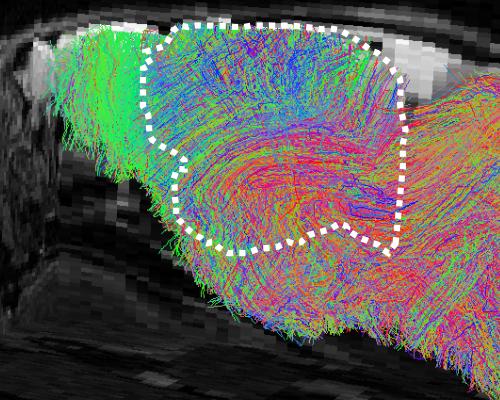
Researchers have created mice with half-human brains in an effort to(为了;力图) understand and develop new treatments for disorders such as schizophrenia(精神分裂症), epilepsy(癫痫), cerebral palsy(脑瘫), intellectual disability and rare forms of dementia(痴呆症).
研究人员培育出了拥有半人脑的小鼠,旨在理解并开发针对精神分裂症、癫痫、脑瘫、智力障碍及罕见痴呆症等疾病的新疗法。
The scientists transplanted lab-grown human brain cells into animals that were engineered to be born without a cortex or hippocampus.(科学家将实验室培养的人类脑细胞移植到经过基因工程改造、天生没有大脑皮层或海马体的动物体内。) This made space for the human tissue to grow inside the rodents(啮齿动物)’ skulls.
科学家将实验室培养的人类脑细胞移植到经过基因工程改造、天生没有大脑皮层或海马体的动物体内。这为人类组织在啮齿动物颅骨内生长腾出了空间。
The procedure(方法;手术) means scientists can now take cells from patients with brain disorders, turn them into brain tissue in the laboratory, and grow that tissue in living animals. The animals can then be studied to see how the disorder takes hold in human brain tissue, and how drugs might treat the conditions.(随后可以研究这些动物,观察疾病如何在人类脑组织中扎根,以及药物可能如何治疗这些病症。)
这一方法意味着科学家现在可以从脑部疾病患者身上提取细胞,在实验室中将其转化为脑组织,再让这些组织在活体动物体内生长。随后可以研究这些动物,观察疾病如何在人类脑组织中扎根,以及药物可能如何治疗这些病症。