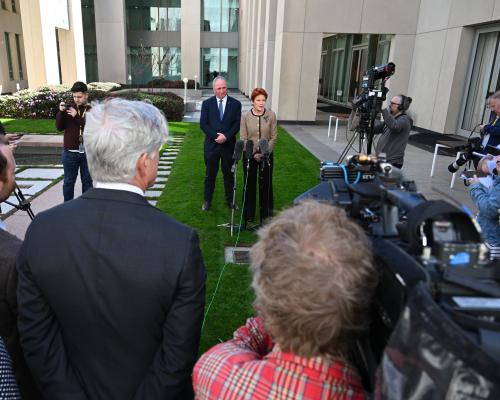
No politician loves journalists. The relationship between media and governments has always been fractious(易怒的,暴躁的), combative(好斗的,好争论的), resentful and at times downright(完全的,彻底的) hostile. But that is how it is meant to be. Governments wield power(掌握权力,行使权力); media monitor and report on it.
没有哪个政客喜欢记者。媒体与政府之间的关系向来易怒、好斗、充满怨气,有时甚至公然敌对。但这正是应有的状态。政府掌握权力,媒体则监督并报道权力的运作。
That dynamic(互动关系,动态) is critical to any functioning democracy. Formal checks and balances will only go so far in exposing abuses of power, so the system requires vigorous, professional and independent individuals devoted to investigating and reporting how governments behave.(正式的制衡机制在揭露权力滥用方面作用有限,因此制度需要充满活力、专业且独立的个人,致力于调查和报道政府的行为。) It isn’t always pretty but it has been an essential component of every effective modern democracy.
这种互动关系对任何运转正常的民主制度都至关重要。正式的制衡机制在揭露权力滥用方面作用有限,因此制度需要充满活力、专业且独立的个人,致力于调查和报道政府的行为。这并不总是光鲜体面,但它一直是每个有效运作的现代民主制度不可或缺的组成部分。
That is why the US has its storied(享有盛名的,有历史故事的) First Amendment(美国宪法第一修正案) – arguably the world’s most elegant(优雅的,简洁精妙的) constitutional guarantee of basic freedoms including freedom of speech and freedom of the press(新闻自由).
正因如此,美国才拥有其享有盛名的第一修正案——它可以说是世界上最优雅的宪法保障,保护包括言论自由和新闻自由在内的基本自由。