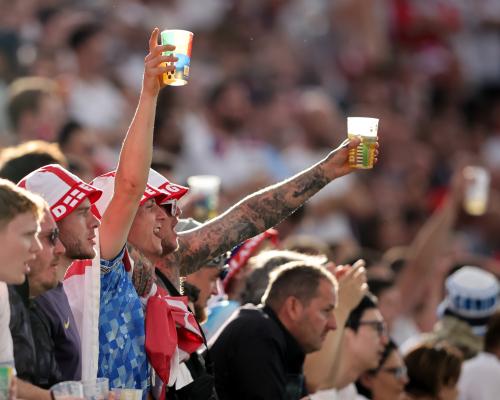
Andy Burnham is right that football fans have historically(历史上,历来) been treated differently from other sports fans. But if we’re going to talk about discrimination(歧视) in football, the ban on drinking at your seat feels like a strange place to start(奇怪的切入点).
安迪·伯纳姆说得没错,足球迷历来受到与其他运动迷不同的对待。但如果我们真要讨论足球中的歧视,从禁止在看台座位上饮酒这一点谈起,却让人感觉很奇怪。
The rule may have its roots in(根源在于) a very different era of football, but for many fans today, being able to take a pint(一品脱(啤酒)) to your seat may not be top of their list(首要之选) of changes they’d like to see in the game. Especially at a time when discrimination is very much present elsewhere in football.(尤其是在足球其他方面歧视问题依然十分突出的当下。)
这条规定或许源于足球一个截然不同的时代,但对今天的许多球迷来说,能把一品脱啤酒带到座位上,未必是他们最希望看到的改变。尤其是在足球其他方面歧视问题依然十分突出的当下。
The legislation, introduced under Margaret Thatcher in the 1980s as part of a crackdown on football hooliganism, was rooted in the idea that football fans needed to be treated differently from the supposedly better-behaved crowds at rugby and cricket – which smacks of classism and the stereotyping of working-class fans.(这项立法于20世纪80年代在玛格丽特·撒切尔执政期间推出,是打击足球流氓行为的一部分,其根源在于一种观念:足球迷需要与橄榄球和板球那些据称行为更端正的观众区别对待——这带有明显的阶级歧视和对工薪阶层球迷的刻板印象。) But football has changed since then, and so has drinking culture. Fans have adapted to the restrictions and built a matchday ritual around them. A good fan concourse pint is up there with(与……不相上下) an airport pint or a beer-garden pint on the first day of summer.
这项立法于20世纪80年代在玛格丽特·撒切尔执政期间推出,是打击足球流氓行为的一部分,其根源在于一种观念:足球迷需要与橄榄球和板球那些据称行为更端正的观众区别对待——这带有明显的阶级歧视和对工薪阶层球迷的刻板印象。但自那以后,足球已经改变,饮酒文化也变了。球迷们已经适应了这些限制,并围绕它们建立起比赛日的仪式感。看台大厅里喝上一杯好啤酒,其享受程度堪比机场里的一杯,或是夏日第一天啤酒花园里的一杯。