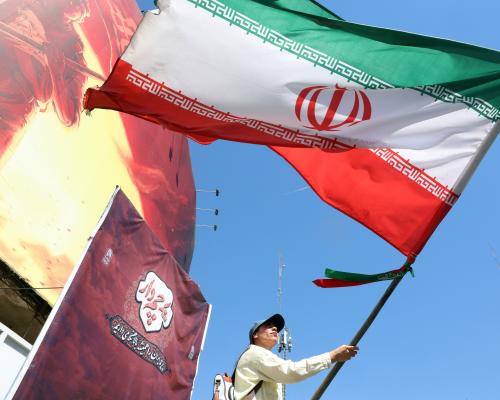
The US president, Donald Trump, asked recently on one of his Truth Social rant(咆哮;怒斥)s: “When are the Iranian people going to rise up(起义;反抗) and fight?” So frenetic and all-over-the-place are Trump’s statements that one does not know which are actual policies and which are simply noise.(特朗普的言论如此狂乱、杂乱无章,以至于人们分不清哪些是真正的政策,哪些只是噪音。) But if counting on the “Iranian people” to rise up and fight is indeed US policy then, as far as I can tell from within Iran, it is a failed one. And miserably so. At least for now.
美国总统唐纳德·特朗普最近在他的一条“真相社交”咆哮帖中问道:“伊朗人民什么时候才会起义反抗?”特朗普的言论如此狂乱、东一榔头西一棒子,以至于人们根本分不清哪些是真正的政策,哪些只是噪音。但如果指望“伊朗人民”起义反抗确实是美国的政策,那么据我在伊朗国内的观察,这是一项失败的政策。而且败得很惨。至少目前如此。
There is no reliable nationwide polling that can tell us what Iranians think about the war in real time.(目前没有可靠的全国性民调能实时反映伊朗人对这场战争的看法。) So this is an observation, not a poll. It comes from conversations I have had with many people.
目前没有可靠的全国性民调能实时反映伊朗人对这场战争的看法。所以这是一种观察,而非民调。它来自我与许多人的交谈。
Though a social researcher, I work closely with Iranian startups and the digital ecosystem. Before the war began, my understanding was that this environment was hardly a hotbed(温床;滋生地) of support for the Iranian state. Quite the opposite: being an advocate of the state was generally frowned upon, not least because of the internet blackouts that had repeatedly disrupted the very infrastructure upon which the digital economy depends.(恰恰相反:公开支持政府通常会遭到鄙夷,尤其是因为互联网断网曾反复破坏数字经济的命脉基础设施。)
虽然我是一名社会研究者,但我与伊朗的初创企业和数字生态系统有着密切合作。战争开始前,我的理解是,这个圈子绝非支持伊朗政府的温床。恰恰相反:公开支持政府通常会遭到鄙夷,尤其是因为互联网断网曾反复破坏数字经济的命脉基础设施。