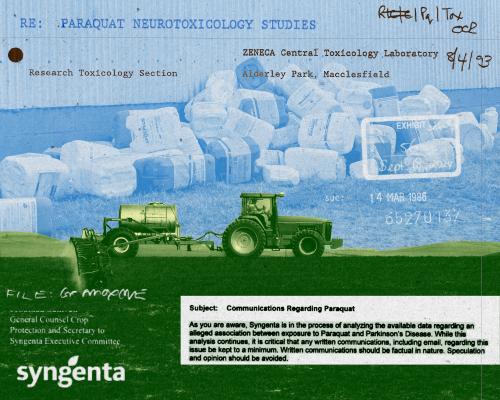
Sweden started ringing the alarm bell(敲响警钟) more than 20 years ago, calling for a ban on the weedkilling chemical paraquat(百草枯) in 2004. One by one, dozens of other countries did the same as evidence of paraquat risks to human health mounted. Even the Chinese government, which owns the longtime paraquat maker Syngenta, halted(停止) domestic use of the pesticide a decade ago after conducting its own studies on paraquat safety and finding troubling results(令人不安的结果).
二十多年前,瑞典率先敲响警钟,于2004年呼吁禁用除草化学品百草枯。随着百草枯危害人类健康的证据不断累积,数十个国家纷纷效仿。就连长期拥有百草枯制造商先正达的中国政府,也在自行开展百草枯安全性研究并发现令人不安的结果后,于十年前停止了该农药在国内的使用。
In the US, two states – Vermont and California – have recently also banned paraquat, citing(引用,援引) risks that include an association(关联,联系) between paraquat and Parkinson’s disease shown in years of scientific research. And California regulators announced in August that paraquat makers voluntarily(自愿地) agreed to stop selling the chemical after the state identified health concerns in connection with its use in new research. Several federal lawmakers have pushed for(推动,争取) a nationwide ban.
在美国,佛蒙特州和加利福尼亚州最近也禁止了百草枯,理由包括多年科学研究显示百草枯与帕金森病存在关联。加州监管机构8月宣布,在该州新研究中发现与百草枯使用相关的健康隐患后,百草枯制造商已自愿同意停止销售该化学品。几位联邦议员一直在推动全国性禁令。
Yet amid the global cloud of concern(在全球担忧的阴云下), the US Environmental Protection Agency (EPA) continues to greenlight(开绿灯,批准) paraquat use on millions of acres, and has downplayed(淡化,轻描淡写) scientific findings linking paraquat to Parkinson’s, an incurable(无法治愈的) brain disease. The agency said in June it would hold a round table(圆桌会议) over the summer to re-examine the “safety challenges” associated with paraquat. But no such event has yet been held or scheduled.
然而,在全球担忧的阴云下,美国环保署(EPA)继续为数百万英亩土地上的百草枯使用开绿灯,并淡化将百草枯与帕金森病——一种无法治愈的脑部疾病——联系起来的研究发现。该机构6月表示将在夏季举行圆桌会议,重新审视与百草枯相关的“安全挑战”。但迄今为止,此类活动尚未举行,也未安排。
‘Bad news’
“坏消息”
‘Brush aside 10 years of research’
“搁置他人十年研究”
Bans span the globe
禁令遍及全球