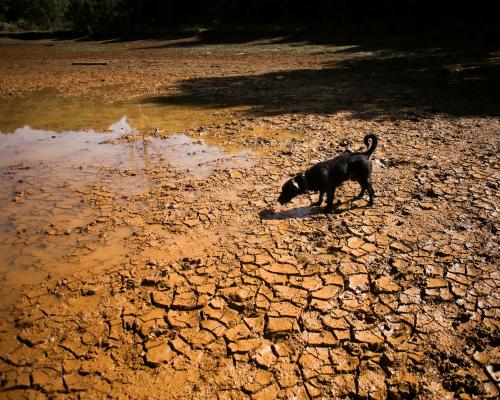
This year’s huge El Niño(厄尔尼诺现象), which comes less than two years since the last one, has already broken temperature records(打破气温纪录). To understand what is happening, and why, the Guardian interviewed Prof Mat Collins, a climate scientist at the University of Exeter, the author of some of the world’s most important climate reports and an expert on the dynamics(动力学;动态变化) of the El Niño southern oscillation.
今年的超强厄尔尼诺距上一次出现还不到两年,却已经打破了气温纪录。为了解正在发生什么及其原因,《卫报》采访了埃克塞特大学气候科学家马特·柯林斯教授。他是世界上一些最重要气候报告的作者,也是厄尔尼诺南方涛动动力学专家。
What is El Niño?
什么是厄尔尼诺现象?
It is a natural climate pattern that affects large parts of the world, often bringing higher temperatures, more droughts and floods. This occurs when the normally cool, dry east Pacific becomes warmer and wetter, shifting rainfall patterns in the tropical Pacific and with other impacts far beyond that(远远超出那之外). It usually occurs every three to seven years, but is very erratic(不规律的;难以预测的). The last one was in 2023-24.
它是一种影响全球大片地区的自然气候模式,常带来更高气温、更多干旱和洪水。当通常凉爽干燥的东太平洋变得温暖湿润时,就会发生这种现象,从而改变热带太平洋的降雨模式,并产生远超该区域的其他影响。它通常每三到七年出现一次,但非常不规律。上一次发生在2023-24年。
What’s the best way to describe the relationship between El Niños and human-caused global heating?
描述厄尔尼诺与人为全球变暖之间关系的最佳方式是什么?
The easiest way to think about this is that they are two separate things that layer on top of each other(相互叠加). So if you’ve already got drought conditions as a result of global warming, then an El Niño is going to exacerbate(加剧;使恶化) that. The harder question is how they interact with each other. With our models, we can use hundreds of years of simulations to work that out but we lack the data to do that from the observational record, although some palaeoclimate reconstructions suggest the present day frequency of El Niño is quite unusual.(借助模型,我们可以用数百年的模拟来弄清楚这一点,但我们缺乏从观测记录中做到这一点的数据,尽管一些古气候重建表明,当今厄尔尼诺的出现频率相当不寻常。)
最简单的理解方式是,它们是两个相互叠加的独立现象。所以,如果全球变暖已经导致干旱,那么厄尔尼诺会加剧这种情况。更难的问题是它们如何相互作用。借助模型,我们可以用数百年的模拟来弄清楚这一点,但我们缺乏从观测记录中做到这一点的数据,尽管一些古气候重建表明,当今厄尔尼诺的出现频率相当不寻常。
How strong is this year’s El Niño? Some are calling it a ‘godzilla’ or ‘super El Niño’
今年的厄尔尼诺有多强?有人称之为“哥斯拉”或“超级厄尔尼诺”
Which areas of the world will be most affected?
世界哪些地区将受影响最严重?
Were the recent high temperatures in the UK and the wildfires in Europe, Canada and the US also worsened by El Niño?
英国近期的高温以及欧洲、加拿大和美国的野火是否也因厄尔尼诺而加剧?
Several scientific papers, including by you, suggest there is a possibility that human-caused climate change is making El Niños more frequent and intense. Isn’t it frustrating that there is still no smoking gun that can prove that with 100% certainty?
包括您在内的多篇科学论文表明,人为气候变化可能正在使厄尔尼诺更频繁、更强烈。至今仍没有确凿证据能百分之百证明这一点,这难道不令人沮丧吗?
James Hansen, arguably the world’s most influential climate scientist of the past 50 years, argues that human-driven climate change is likely behind the abnormal strength of this El Niño. What’s your take on that?
詹姆斯·汉森可以说是过去50年世界上最具影响力的气候科学家,他认为人为气候变化可能是今年厄尔尼诺异常强大的原因。您对此有何看法?
Will warmer Pacific ocean surface temperatures guarantee fiercer El Niños?
太平洋海表温度升高是否一定会导致更猛烈的厄尔尼诺?
May this year’s huge El Niño be a sign that the world’s oceans are – to use a non-scientific term – vomiting heat into the atmosphere because they are reaching the limit of their ability to absorb excess energy?
今年的超强厄尔尼诺是否可能是一个迹象,表明世界海洋——用一个非科学术语来说——正在把热量“呕吐”到大气中,因为它们吸收多余能量的能力已接近极限?
What would be your hunch about whether El Niños are going to get more powerful in the future?
您对厄尔尼诺未来是否会变得更强大有何直觉判断?
How can we reduce the risks?
我们如何降低风险?
Would such geoengineering help or could it make things worse?
这样的地球工程会有所帮助,还是可能使情况更糟?
On an emotional level, how do you feel at the prospect of even more impactful El Niños in the future?
从情感层面来说,面对未来更具破坏性的厄尔尼诺,您有何感受?