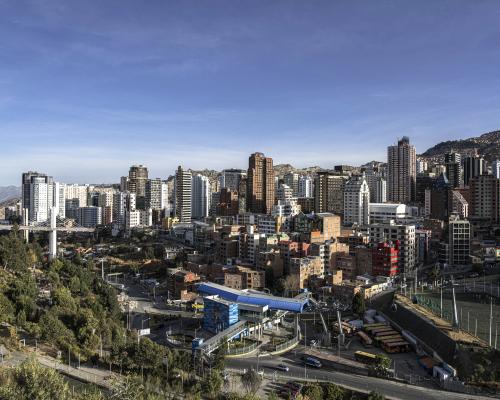
Once hailed(被誉为) as the “energy heart of South America”, Bolivia’s economy was buoyed up(支撑、提振) by a fossil gas boom from 2006 to 2014. At its height, then-president Evo Morales(玻利维亚前总统) commissioned(委托建造) a gleaming(熠熠生辉的) presidential skyscraper and installed the world’s longest urban cable car network in La Paz(玻利维亚政府所在地), the seat of government.
玻利维亚曾被誉为“南美能源心脏”,2006至2014年间,化石天然气繁荣支撑起该国经济。在鼎盛时期,时任总统埃沃·莫拉莱斯下令建造了一座熠熠生辉的总统摩天大楼,并在政府所在地拉巴斯建成了全球最长的城市缆车网络。
Flush with cash(资金充裕), the country grew its GDP, expanded social programmes and halved poverty rates. But then commodity prices plummeted(暴跌) and gas reserves started to dry up(枯竭), bringing Bolivia’s “economic miracle(经济奇迹)” crashing down(轰然崩塌). Inflation – once the region’s lowest – has soared(飙升).
资金充裕的玻利维亚实现了GDP增长,扩大了社会福利项目,并将贫困率减半。但随后大宗商品价格暴跌,天然气储量开始枯竭,玻利维亚的“经济奇迹”轰然崩塌。曾经是该地区最低的通胀率如今已飙升。
In the markets of La Paz, some imported staples(主食、基本食品) have now doubled in price. “Because prices are so high, people are buying less and switching to(转向) the cheapest options,” says Felipa Huanca, who sells vegetables at the city’s bustling(熙熙攘攘的) Rodríguez market. “Wages just aren’t keeping up(跟上).”
在拉巴斯的市场上,一些进口主食的价格已经翻倍。“因为价格太高,人们买得更少,转而选择最便宜的选项,”在城里熙熙攘攘的罗德里格斯市场卖菜的费利帕·万卡说。“工资根本跟不上。”