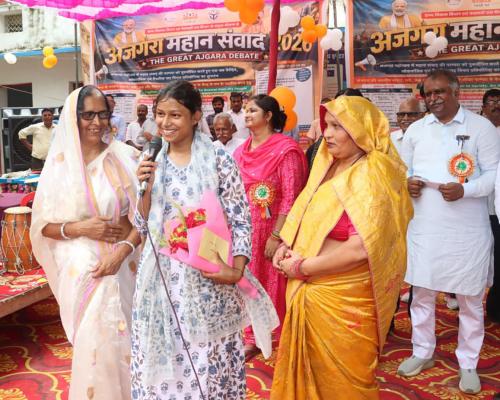
The setting for perhaps the country’s biggest exercise in public debate was quintessential(典型的,精髓的) rural India: fields of green paddy(稻田,水稻), a pond, a temple. On a normal day, as dusk(黄昏,傍晚) falls in the village of Ajgara, in Uttar Pradesh, people gather beside the pond to chat about the price of crops, the weather, or the theft(偷窃,盗窃) of a goat.
这场或许是印度规模最大的公共辩论活动,举办地点是典型的印度农村:碧绿的稻田、一方池塘、一座庙宇。平日黄昏时分,北方邦阿杰加拉村的村民们会聚在池塘边,聊聊庄稼价格、天气,或是谁家的山羊被偷了。
But for more than a month, metaphysics(形而上学,玄学) and ethical dilemma(伦理困境,道德两难)s replaced the usual topics. Is it permissible(可允许的,准许的) to use deceit(欺骗,欺诈) to defeat an evil enemy? Is a lie justified(有正当理由的) to save a life? What is the nature of reality?
但一个多月来,形而上学和伦理困境取代了日常话题。为了打败邪恶的敌人,可以使用欺骗手段吗?为了救人性命,撒谎是否正当?现实的本质是什么?
The debating tournament was the brainchild(创意,智力产物) of Abhishek Pandey, district magistrate(县长,地区行政长官) of Pratapgarh district in Uttar Pradesh. When he took up the post two years ago, he knew the area was rich in archaeological(考古的,考古学的) treasures connected to the ancient Indian epic, the Mahabharata(《摩诃婆罗多》,古印度史诗).
这场辩论赛是北方邦普拉塔普加尔县县长阿布舍克·潘迪的创意。两年前上任时,他就知道该地区蕴藏着丰富的考古宝藏,与古印度史诗《摩诃婆罗多》有关。