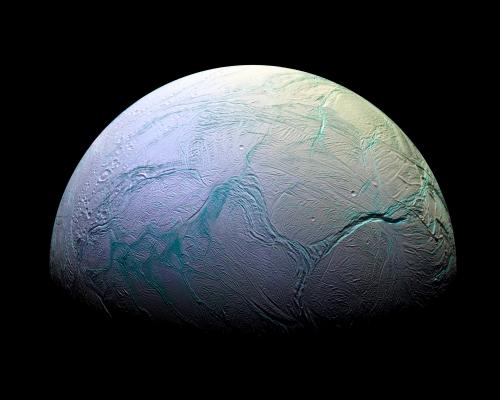
From the moment scientists spotted plumes of water erupting from Enceladus, one of Saturn’s moons, it became the most tantalising place in the solar system to search for life beyond Earth.(自从科学家发现土卫二喷射出水柱,它就成了太阳系中最诱人的地外生命搜寻地。)
自从科学家发现土星卫星土卫二喷射出水柱的那一刻起,它就成了太阳系中最诱人的地外生命搜寻地。
Now the case is even more compelling after researchers found that organisms that live in deep-sea waters off Japan can survive the harsh conditions expected in the briny ocean that lurks beneath Enceladus’s icy crust.(如今,这一理由更加充分了:研究人员发现,生活在日本深海中的微生物能够存活于土卫二冰壳下那片咸涩海洋的恶劣环境中。)
如今,这一理由更加充分了:研究人员发现,生活在日本深海中的微生物能够存活于土卫二冰壳下那片咸涩海洋的恶劣环境中。
The microbes, which thrive near hydrothermal vents on the seafloor by converting hydrogen and carbon dioxide into methane, survived in a brine that mimicked the Saturnian moon’s ocean.(这些微生物生活在海底热液喷口附近,通过将氢气和二氧化碳转化为甲烷而繁衍生息。它们在模拟土卫二海洋的盐水中存活了下来。) The work suggests the distant world may be habitable, if not exactly hospitable(尽管未必好客), to at least some forms of life.
这些微生物生活在海底热液喷口附近,通过将氢气和二氧化碳转化为甲烷而繁衍生息。它们在模拟土卫二海洋的盐水中存活了下来。这项研究表明,这个遥远的世界可能至少对某些形式的生命是宜居的——尽管未必好客。