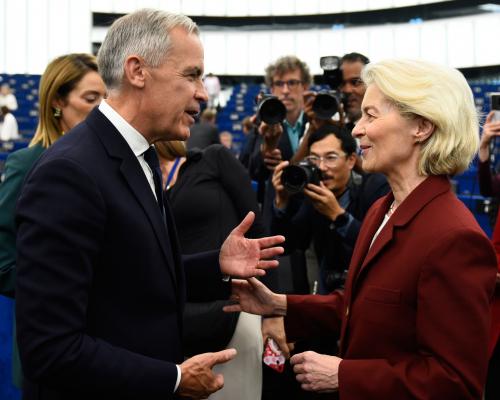
The EU and Canada, Ursula von der Leyen said last week, “see the world with the same eyes(看待世界的方式一致)”, with shared stances on everything from AI to the climate crisis, the Ukraine war and the unholy chaos unleashed by the current occupant of the White House(从人工智能到气候危机、乌克兰战争,再到白宫现任主人所释放的邪恶混乱,双方立场一致。) (OK, she didn’t actually say that last bit. But I like to think she almost certainly thought it.)
欧盟委员会主席乌尔苏拉·冯德莱恩上周表示,欧盟与加拿大“看待世界的方式如出一辙”,从人工智能到气候危机,从乌克兰战争到白宫现任主人所释放的“邪恶混乱”,双方立场高度一致。(好吧,最后那句她其实没说出口。但我愿意相信,她心里几乎肯定是这么想的。)
So, the European Commission president went on, Canada should become “the first associate member of the EU”. In the audience, Mark Carney beamed(喜形于色;笑容满面) with delight. The next day, Canada’s prime minister enthusiastically embraced the idea(欣然接受这一想法) of an “alliance for the future”, to build “collective resilience(韧性;恢复力)” through “deep cooperation”.
于是,这位欧盟委员会主席接着说,加拿大应当成为“欧盟首个准成员国”。台下的马克·卡尼喜笑颜开。第二天,这位加拿大总理热情拥抱了“未来联盟”的构想,主张通过“深度合作”来构建“集体韧性”。
Cue(于是就有了;随即出现) standing ovations, warm handshakes – and a great deal of head-scratching(困惑;挠头不解) in Brussels and assorted(各种各样的;各色) EU capitals. Because “associate membership” of the EU is not, in fact, a thing. Nor, as a Guardian editorial pointed out, is there “any blueprint for what such a thing might involve”.(正如《卫报》一篇社论所指出的,也“没有任何蓝图说明这种身份究竟意味着什么”。)
于是,全场起立鼓掌、热情握手——而布鲁塞尔和欧盟各成员国首都却是一片挠头困惑。因为欧盟的“准成员国”身份,事实上根本不存在。正如《卫报》一篇社论所指出的,也“没有任何蓝图说明这种身份究竟意味着什么”。